The buyer will not need a licence to buy a knife, but under Home Office plans confirmed on 25 November everyone selling one in England and Wales will need a licence to sell it. The government response to its consultation on licensing knife sales says the Government “intends to legislate to introduce a licensing scheme for sales and imports of knives”, and that it “would be a criminal offence to sell a knife or bladed article without the relevant licence to do so”.
The decision, published with a written statement from policing minister Sarah Jones, was taken despite 52% of online respondents opposing a licence for business sellers and 61% opposing one for private sellers. For anyone who buys a stalking, folding or kitchen knife, it changes where the knife can come from and what the shop must do with it before it reaches the counter.
Where will you be able to buy a knife?
From a licensed seller. Both businesses and private sellers would need the licence, whether they sell in a shop or at a distance, so the gun shop, the country store, the game fair stand and the online retailer would each hold one. It would last three years and be renewable, with a fee set at full cost recovery that has not yet been fixed. A buyer should expect the licence to become part of what a reputable seller shows, as a registered firearms dealer’s registration is today, and a seller trading without one would be committing an offence.
The private sale is the one to watch. A knife bought second-hand from an individual, at a club, online or from a friend, is a sale by a private seller, and private sellers are covered. On the face of the response the seller would need a licence, and a buyer offered an unlicensed private sale would be buying from someone committing an offence once the law is in force.
What an overseas order will involve
A separate import licence would be open to UK businesses but not to private individuals, so a buyer could not import a knife direct under his own licence. A seller based abroad would have to appoint a UK intermediary company to hold the licence, which means an order placed with a Scandinavian, German or American maker would be fulfilled through that British intermediary, and the intermediary, not the maker, would be the licensed seller. The Home Office says it is exploring a combined sales and import licence, which would let one UK business both import and sell.
How the display case may change
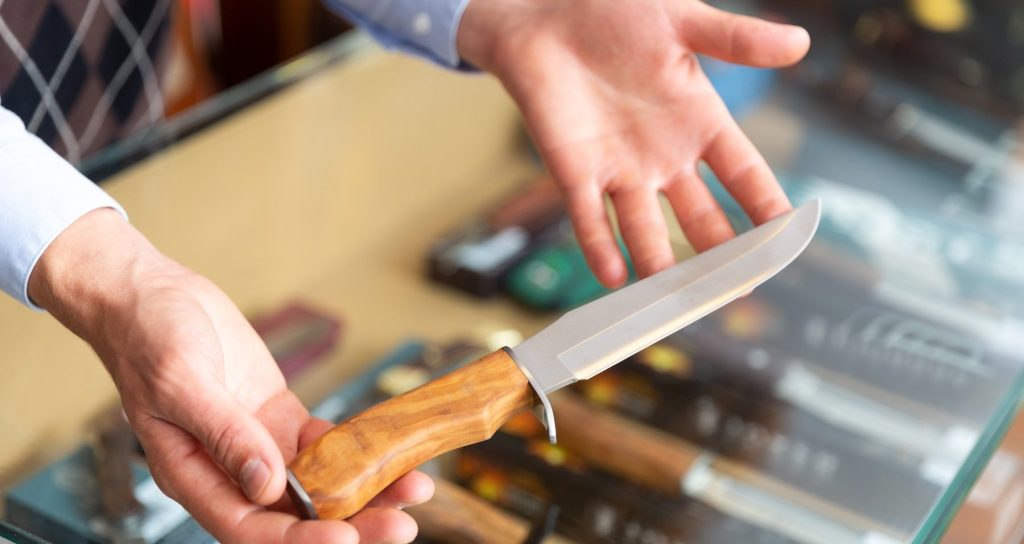
Conditions “may include regulated storage and display of blades”, and enforcement agencies would be able to revoke a licence where the conditions are not met. The detail is not yet written, so nobody can say whether the open rack of folding knives beside the till survives or every blade goes behind glass, but a buyer should expect to ask for a knife rather than pick one up. The law already in place does not change: it is an offence to sell a knife to anyone under 18, and the Offensive Weapons Act 2019 restricts how a bladed product bought at a distance can be delivered to a home address.
Some sellers may simply stop. Andrew Goodacre, chief executive of the British Independent Retailers Association, said: “Some shop owners may decide to stop selling bladed items as a result of this licensing.” Lucy Whing, crime policy adviser at the British Retail Consortium, said licensing “should be proportionate and risk-based, targeting the products and sellers most closely linked to harm”. Fewer counters selling knives means fewer places to compare one blade against another in the hand.
Who argued against it
The consultation ran from 16 December 2025 to 24 February 2026 and drew 3,551 responses. Small and medium-sized businesses opposed the business licence by 79% and the private one by about nine in 10; 95% of the 255 collectors, re-enactors and historical fencers who responded opposed a licence for private sellers. BASC and the Gun Trade Association (GTA) told the consultation in January that the proposals were the wrong way to tackle knife crime. The Countryside Alliance said: “The problem is not the lawful sale of knives but ensuring they do not fall into the wrong hands.” Police, councils and the Crown Prosecution Service were largely in favour, though 44% of police respondents raised concerns about resourcing.
Ms Jones said: “If you make money selling knives, you should be responsible for making sure they are sold safely and lawfully.” The response draws on Scotland, which already licenses dealers in non-domestic knives, and says knife crime has fallen 11% since June 2024. No exemption has been written for countryside, hunting or stalking knives; ministers “will carefully consider the case for exemptions for heritage collections, crafts and trades”.
What happens next
There is no bill yet and no date, so nothing changes at the counter this season. Legislation will be brought forward and “in due course” supported by guidance; the fee, the conditions and the penalties beyond the new offences remain to be set. A buyer with a knife purchase in mind loses nothing by waiting, and one with a used knife to sell should know that the private sale is the part of the scheme most likely to catch him out once it is law.
Frequently asked questions
Do I need a licence to buy a knife?
No. The licence the Government intends to legislate for falls on the seller, business or private. Buying a knife remains lawful for anyone aged 18 or over.
Can I buy a knife second-hand from a private seller?
Under the scheme as described, a private seller would need a licence too, and selling without one would be a criminal offence. No date has been set for the law to take effect.
Will I still be able to order a knife from abroad?
The response says an overseas seller would have to appoint a UK intermediary company to hold the licence, so the order would be fulfilled through that British business. Private individuals could not hold an import licence.