Gun Reviews >
 Find a Dealer >
 Find a Club >
 Competitions >
 videos >
 Reader Survey >
Gamo GX250
- Last updated: 30/08/2024



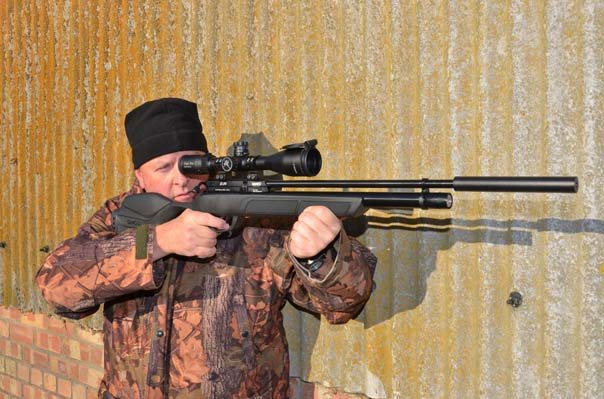
It’s no secret that Gamo’s PCP models are actually made by a certain famous brand based in Birmingham, and they have been very well received. The combination of no-nonsense features and value for money has found a ready fan base. So, when I heard that the GX40 had now been updated to the GX250, I was keen to get hold of one for evaluation.
Same but different
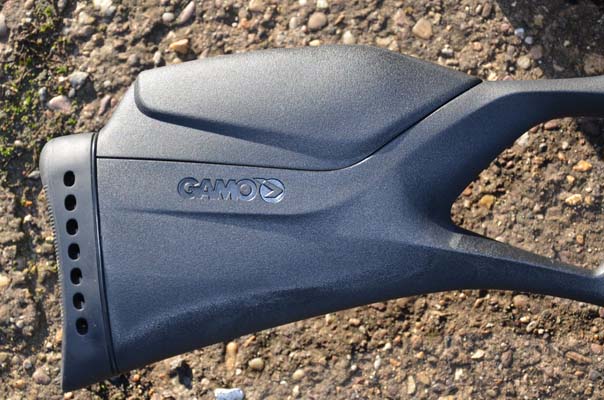
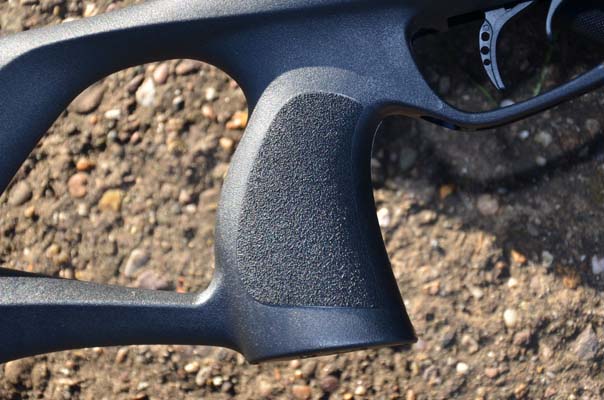
Firstly, let me just say that the Gamo GX40 was one of the best-value PCPs I have tested, and a huge part of the appeal was the synthetic composite stock. The configuration is just a lovely piece of design work, and it’s one of those rifles that feels straight at home in the shoulder as a result. The open thumbhole incorporates a drop-down semi-target grip, nicely thinned down, and the sleek forend is perfectly shaped for a comfortable hold up front. Both the grip and forend are covered with raised grip sections that are all part of the moulding, whilst the high profile, super-stylish cheekpiece works brilliantly. I’ve seen the cheek section advertised as adjustable I might add, but despite that very misleading profile, suggesting that it should, it, er, doesn’t!
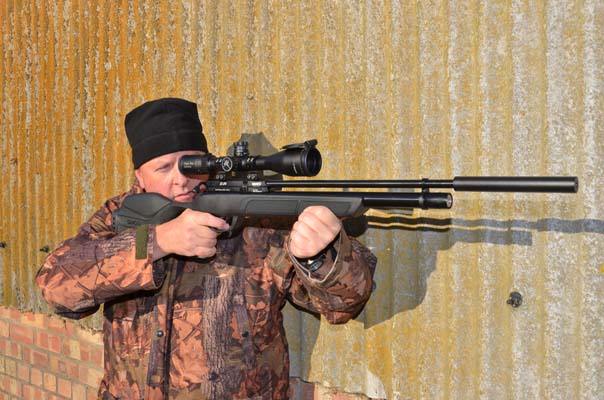
Anyhow, the same stock is fitted to the revised Gamo GX250, and that, believe me, is very good news and a brilliant starting point. So, visually, the GX250 is very similar to the ‘40, with the only real difference being that the cylinder has been extended by a few inches. So, if it’s nearly identical, what’s the big deal?
Rationalisation & streamlining
Production costs must be taken into account by manufacturers, and staying competitive isn’t easy in the face of ever-rising energy costs, and raw materials. Sometimes changes need to be made to reset the process, and that apparently is what has happened here with the factory production line behind the scenes. Revisiting, rationalising, and streamlining the entire process of making this Gamo, and how it is assembled, has enabled the manufacturers to trim costs from various elements, and the end result is a lower RRP to the customer. That’s good news at a time of economic uncertainty when external pressures are at play in the market.
Combo deal
Look inside the box and the GX250 comes supplied with a sleek Phox silencer, a comprehensive instruction manual, a filling adapter, a magazine, and also a Gamo 3-9x40 scope and one-piece mount. I must be honest here and state that I put the kit scope to one side for the duration of the test, as the one-piece mount features a stop/arrestor pin in the base, and I couldn’t get it to retract. Given that there’s no arrestor hole on the gun’s receiver, this was to be a non-starter, so I bolted on an MTC Viper Pro Tactical that I had handy. In the real world, and faced with the same recalcitrant one-piece mount, a trip or call to the dealer should do the trick. I would also add here that I’m rarely happy with a kit scope, and whilst it can be handy to get us up and running straight away, this GX250 is the classic case where the quality of the gun is such that it just warrants better glassware.
Familiar features
Focusing on the action, and given where this model is made, it’s no surprise that it comes fitted with a cold hammer forged BSA barrel, which it’s fair to say, gives any airgun a good start in life. There’s also an onboard manometer, valve cover, 2-stage adjustable trigger, manual safety catch, bolt action, ½” UNF threaded muzzle, and 10-shot magazine. In theory, this model has a longer cylinder by a few inches than its predecessor, so the shot count should be greater too.
On the level
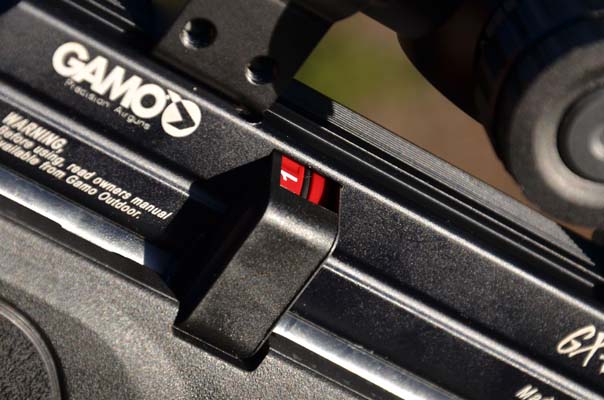
The ten-shot magazine is a familiar rotary cassette design, and these have a small display that shows the number of shots remaining. These mags require no pre-winding, so just drop a pellet headfirst into the empty chamber, revolve the drum, and repeat until all chambers are full. It’s a handy feature and one worth mentioning that the magazine well is totally contained within the receiver, so a continuous run of dovetail rail runs over the top. Anyone familiar with rival configurations, where the magazine protrudes way above the top of the receiver, necessitating the use of high mounts, will appreciate this rather more civilized approach. Fitting a scope is therefore easy.
As for the cylinder, this needs to be charged to 232 bar via the probe adaptor fitting that’s supplied with the rifle. The synthetic valve cover just needs to be pulled off, and then the airline/probe can be carefully inserted. Safety dictates that we check the probe is still fully inserted a short way into charging, but otherwise, this method works well. As for the forward-mounted manometer, it’s not the clearest (or safest) to read, but the coloured sections tell the story - the lower red zone is pressure too low, the green middle band is the usable pressure zone (100 to 232 bar), and the upper red section denotes too high a pressure. The gun’s gauge, as always, should be used as a secondary basic guide, so use the charging gear for a more accurate picture.
Handling/operation
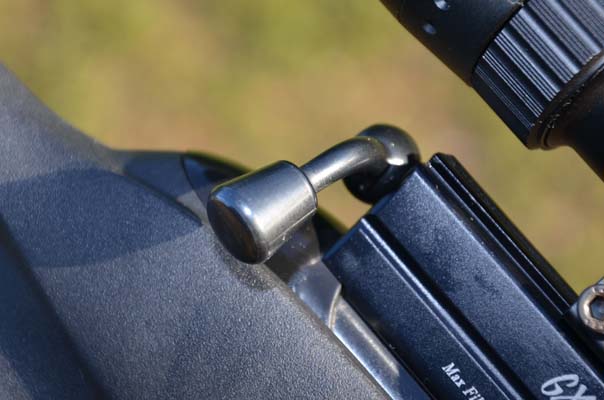
On the range, and with the GX250 charged and ready to go, I was keen to see how it shot. Pull back the traditional bolt handle and hear the action set, then with the bolt fully withdrawn, slide the full magazine into its slot from the left-hand side. Close the bolt and we’re ready for action. On test with this model, I did find the cocking mechanism a little bit sticky in operation, finding that a positive cocking action was needed to ensure everything had set correctly. Slip into a half-hearted and too-gentle approach, and the magazine may have cycled to the next shot, but the hammer and trigger are not always set. Pull back the bolt in one bold sweep, and you should be OK.
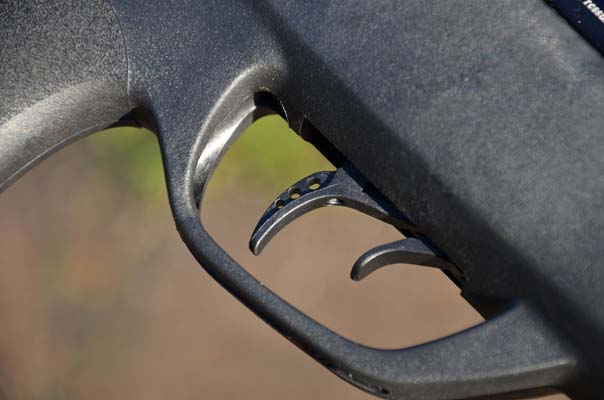
With its comfortable flat surface and snappy action, the trigger is similar in appearance and feel to Gamo’s Smooth Action Trigger (SAT) system, and certainly reacts in much the same way, with a super light first stage, which I like, and a little creep on the second stage. It’s a fairly light release overall though, so whilst not the most sophisticated unit, it’s all very acceptable and suits the no-nonsense remit on offer here. I can’t help my indifference to safety catches, but as mentioned, there is a manual one that takes the form of an in-guard tab just forward of the trigger blade. Snap it back to lock the trigger and nudge it forward to release the mechanism.
Stat attack
Gamo specifies this model as having a ‘self-regulating valve’, and whilst this is deemed less sophisticated against a full-blown regulator, the difference is largely academic in the real world.
The claimed shot count is 120 shots in .177 calibre and 135 in .22. As for my test session, and from a starting specified 232 bar, I clocked 125 shots from my .22 rifle, all within a total spread of 24 fps, which I reckon is pretty superb. I stopped with a residual pressure around the 80-90 bar region, and I used BSA Goldstar pellets for the record. I don’t doubt I could have hit the claimed figure, but velocity did begin to drop off thereafter. My only confusion arose from the fact that despite claims that this model was supposed to be 25% more efficient than the GX40, my results with both guns have been nearly identical.
As for accuracy, all I can say is the BSA choked barrel made its presence felt, with ragged keyhole clusters over 30 yards, and then groups a little over a 0.25” at 40 yards! That’s flipping good going, and in the heavier .22 calibre too.
Verdict
An honest appraisal concludes that there are more sophisticated guns out there and that the slightly sticky bolt cycling means care needs to be taken in the field. That said, there’s a difference between slower deliberate shots when it matters, rather than semi-speed shooting through a chronograph testing session. Quite simply, despite its shortcomings, this is an above-average PCP for the money, capable of serious performance. So, my advice is don’t get too hung up on the advertising about increased efficiency and just appreciate this new version for being a clever cost-cutting exercise, keeping a quality PCP in the sub £400 bracket, which is no mean feat. Whilst the official RRP is £399, this model can be found for significantly less, and in my view, it’s a bargain either way.
Thanks to Range & Country Shooting Supplies in Sleaford, Lincs., for the kind loan of this rifle.
click on image to enlarge
click on image to enlarge
click on image to enlarge
click on image to enlarge
click on image to enlarge
click on image to enlarge