Gun Reviews >
 Find a Dealer >
 Find a Club >
 Competitions >
 videos >
 Reader Survey >
Kral Puncher K Synthetic Review: A Hunter’s Ultimate Lightweight PCP Air Rifle
- Last updated: 23/06/2025



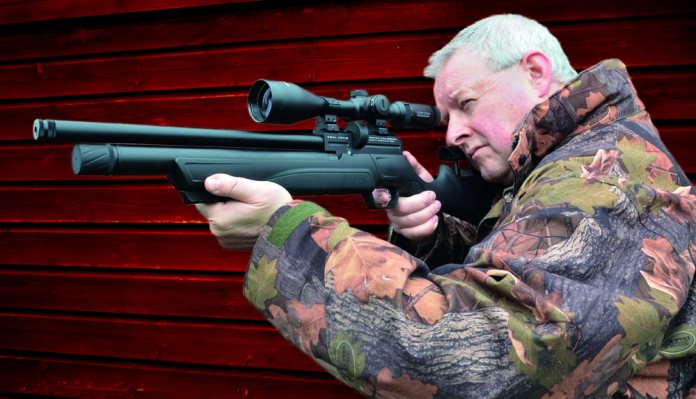
I tested the original Kral Puncher back in 2016, and if my memory serves me correctly, this was Kral’s first PCP air rifle. It’s hard to believe when you consider the extensive range of models they now produce, with all manner of configurations, but it all started with this plucky little sporter.
The Slimline Kral Puncher K: A Compact and Maneuverable Carbine
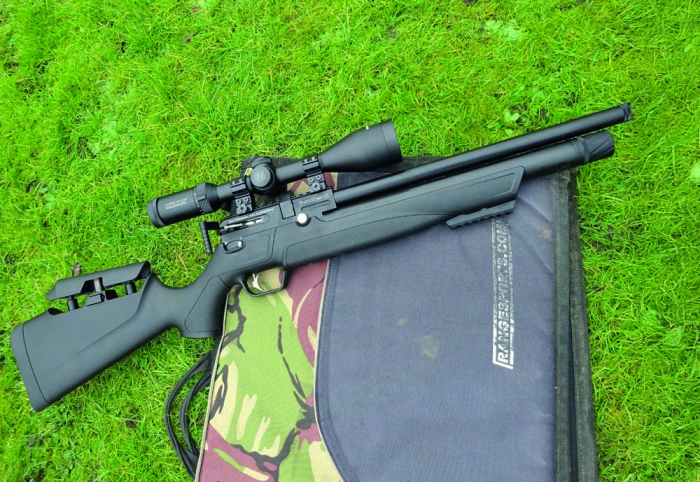
On test here is the very latest carbine ‘K’ model, and this trims both length and weight from the original design brief. It’s 5.5” shorter and almost half a pound lighter, which is significant and a great option, especially for hunters who want a fast-handling PCP. It’s easier to manoeuvre in a hide, for example, and less weight means it shouldn’t tire the user over an extended session.
Basic stuff, but it matters!
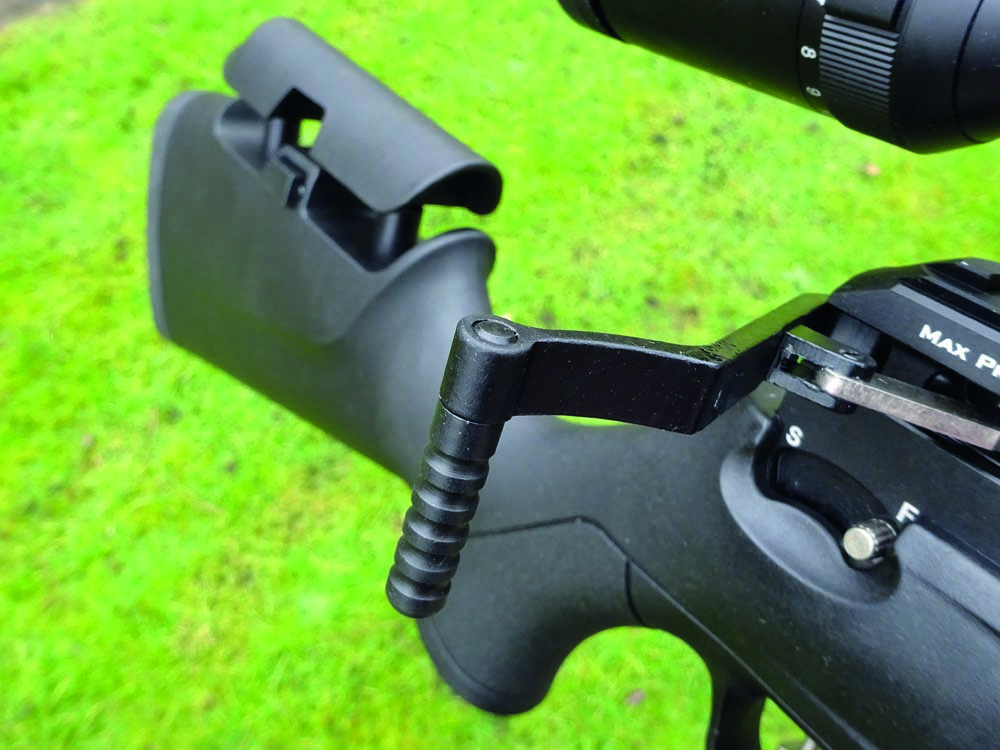
Available in tasty Turkish walnut or black synthetic, both options, intriguingly, are listed as weighing the same: 7lbs. Now, I should point out an important detail here, which is that if you take the black synthetic stock route, as per my test rifle, it features an adjustable cheekpiece—a detail which is missing on the walnut version, so something to bear in mind.
“If my test model is anything to go by, this latest
Kral Puncher K is unlikely to disappoint.”
Getting Started: Unboxing and Setting Up the Kral Puncher K
Alongside the Puncher K in the box, we get a bag of goodies, which includes the instruction booklet, two magazines, the filling adaptor, spare seals, a single-shot tray, and some Allen keys. There’s an abundance of features to get through, as Kral gives you quite a bit for the money, but I’ll work through them stage by stage.
Fitting a scope is perhaps the best place to start, and Kral’s clever twin rail mounting system, incorporated here, is brilliant. The inner rail is a conventional dovetail, but for those who feel happier using Picatinny mounts that lock into the cut-outs, then simply use the outer rail. It’s a simple idea, but avoids all the stress of not having the correct mounts.
My test gun came directly from the UK importers, Range Right, and they had already fitted one of their popular Konus scopes, the Konuspro Evo 3-12x50. This is quite an impressive optic in itself, with the only downside being that it is quite weighty, slightly defeating the object of this super-compact, lightweight sporter. Nevertheless, for the purposes of my test, it did the job nicely, so I left it in place for the duration.

Achieving Perfect Aim: Adjusting the Stock and Eye Relief
Next, we’ll check eye/scope alignment, which is a job we can do without even firing a shot. Get into position, mount the rifle, and we’re looking for the point at which a full sight picture is possible, with minimal strain and full support. This is where the adjustable cheekpiece comes in, and with a user-friendly push-button mechanism, it’s a great design. Just press the button and gently move the cheekpiece to the desired height. It technically clicks into notches, but the spring seemed to hold it at whatever level I selected. I counted 10 different settings including fully closed, and the panel can be raised just over 1.5”, offering plenty of versatility for anyone, and a serious asset in the features list.
Multi-Shot Capability: A Closer Look at the Magazine System
As mentioned, we get two magazines to play with here, and they feel impressive. Kral’s first design of magazine on the original Puncher I tested many moons ago was fiddly and overly complicated, but wow, have they learned their craft along the way. For this latest Puncher K we see before us really is a very different animal. The magazine system is completely different, and I can happily report that, despite its plastic construction, it’s very precise and well made. My test rifle was in .22 calibre, which uses 12-shot magazines; the .177 version holds 14 shots, while the .25 variant comes with a 10-shot mag.
Filling the magazine is done in the familiar way, by twisting the cover clockwise right round against spring pressure. Next, drop the first pellet head-first into the chamber, which holds the drum, then turn the cover slowly back anti-clockwise, filling each chamber in turn.

Charging the Puncher K: Understanding the PCP Fill Process
Kral specifies this model as having a maximum fill pressure of 200bar, and with a 200cc cylinder on board, there’s plenty of air reserves. Look underneath the fore-end, and there’s a neatly recessed manometer, clearly marked with three coloured sections: yellow 0–100bar, the green working pressure section of 100–200bar, and then red showing high pressure. Work within the green section, and all will be well.
The filling valve sits at the front of the cylinder, and there’s a push-fit metal dust cover that needs to be pulled away. This proved a bit stiff on test, which was irritating, as it made it tricky to remove the cap without scratching the shroud. It should ease with use, but further irritation comes with the filling valve itself, which looks like a Foster fitting, but isn’t. No need to panic, as the dedicated adaptor comes supplied. This has a spring-loaded clasp inside, which again proved a bit tight on my example. Again, after a little fiddling, I had 200bar slowly delivered, and the stubborn cover replaced. Right, almost ready.
Stealth and Sound: The Full Shroud and Silencer Compatibility
I love the visuals of this Puncher K, and the full-length shroud plays its part, creating the ‘bull barrel’. However, with the barrel just a whisper over 16”, which is quite short for a PCP, unsurprisingly, there’s a right old crack as she fires. The barrel comes within an inch of the muzzle, so there’s no sound suppression going on. No cause for alarm, though. Just remove the knurled cap, and there’s a ½” UNF thread ready and waiting for a silencer of your choice. I’d think hard here, as it always seems a shame to lose that super-short profile. If hunting duties are on the cards, though, that’s a different matter, and a moddy will be a prerequisite.
Fine-Tuning Performance: The Adjustable Two-Stage Trigger
When you consider the high-pressure air that we are dealing with in this style of airgun, it really should be standard procedure that we get decent instructions, but many are basic in the extreme, in my experience. Not so here, as Kral includes a large, easy-to-read, commendably clear, fully illustrated instruction booklet, covering basic safety, filling the rifle, loading the magazine, troubleshooting, etc.
Another feature covered is tweaking the two-stage trigger, and this is adjustable for the first stage, second stage, and sear contact. This is good news. The bad news is that the stock first needs to be removed for access to the relevant screws. Stock removal is via a chunky Allen bolt sitting just in front of the trigger, so easy to do. As for trigger adjustment, if you’re not confident, then just seek experience. Of course, the one area where we can all dive right in is the adjustable, match-style trigger blade. Slacken the small screw in the support pillar, and just move it as required. It’s a great feature and one of those things that make more difference than you realise.
Accuracy and Power Testing: Putting the Kral Puncher K Through Its Paces
OK, we’re off. Pull back the biathlon-style side-lever, and it flies back 45 degrees under spring pressure. Completing the full 90 degrees takes only modest effort. Now insert the full magazine in from the right side, into its groove, and push home the lever. This takes more effort than some, but on test, it all proved smooth and, I have to say, totally reliable. Cycle the lever, and shots come as quick as you like, with the number of shots remaining displayed in the tiny shot count window on the mag. It’s impossible to fire just air too, as when the mag is empty, the bolt won’t return. Fancy a single shot? Then the small plastic breech insert replaces the mag in the normal way.
Over the chronograph, I managed 100 shots from the recommended 200bar fill, and stopped when residual pressure dropped to 100bar, the bottom end of the clearly marked green sector on the gauge. This returned a total spread of 48fps. This is an unregulated action, remember, so if you stick to 60–70 shots, you’ll see a tighter velocity band over the chrono.
Don’t forget that there is also a built-in power adjuster in the form of a silver knob on the right side. Dial it right down, and you’ll get a crazy number of shots, low-powered, around the 3ft/lbs mark, but a great feature when practice or plinking is the priority. Just dial it back up for full power.
Accuracy-wise, my test rifle started with enlarged ragged holes over 30 yards, so I moved to 40 yards to give it a fair evaluation, and my best efforts were quite superb. Centre-to-centre, a fraction over a ¼”, which is top class in most people’s books, and that was reasonably easy to come by, with Air Arms Diabolos straight from the tin! Spend more time tweaking, and getting everything just so, and this Puncher K looks to be a serious bit of kit.
The Final Verdict: Is the Kral Puncher K the Right PCP Air Rifle for You?
Take the time to get the optimum fill pressure right, to maximise consistency, as is the case with any unregulated PCP, and if my test model is anything to go by, this latest Kral Puncher K is unlikely to disappoint. A compact, solid tool that looks ideal in a hunting scenario.

click on image to enlarge

click on image to enlarge

click on image to enlarge

click on image to enlarge

click on image to enlarge

click on image to enlarge

click on image to enlarge

click on image to enlarge

click on image to enlarge

click on image to enlarge

click on image to enlarge
click on image to enlarge

click on image to enlarge

click on image to enlarge

click on image to enlarge