Gun Reviews >
 Find a Dealer >
 Find a Club >
 Competitions >
 videos >
 Reader Survey >
Savage Revel DLX Review: Rediscovering Lever-Action Marksmanship
- By Chris Parkin
- Last updated: 13/08/2025



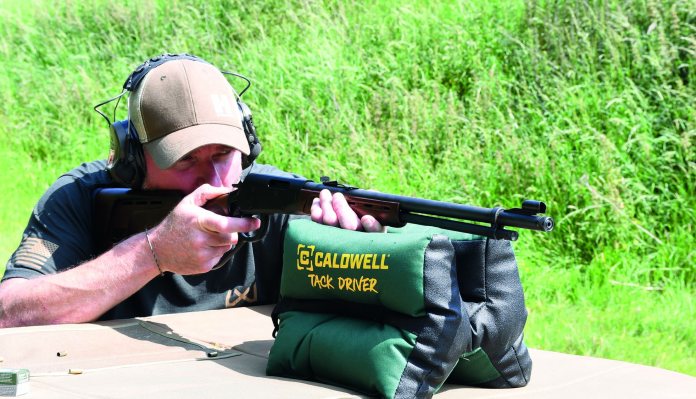
We’re living in an age of technologically advanced firearms. It’s not just the function of modern rifles, but how they’re manufactured. Computerised machining has replaced much of the hand-finishing once essential in gunsmithing, and materials, coatings, and even sights have evolved dramatically. While the trend is leaning towards everything going digital, with even optics subject to cost-cutting measures, one has to ask: where do iron sights fit into all of this?
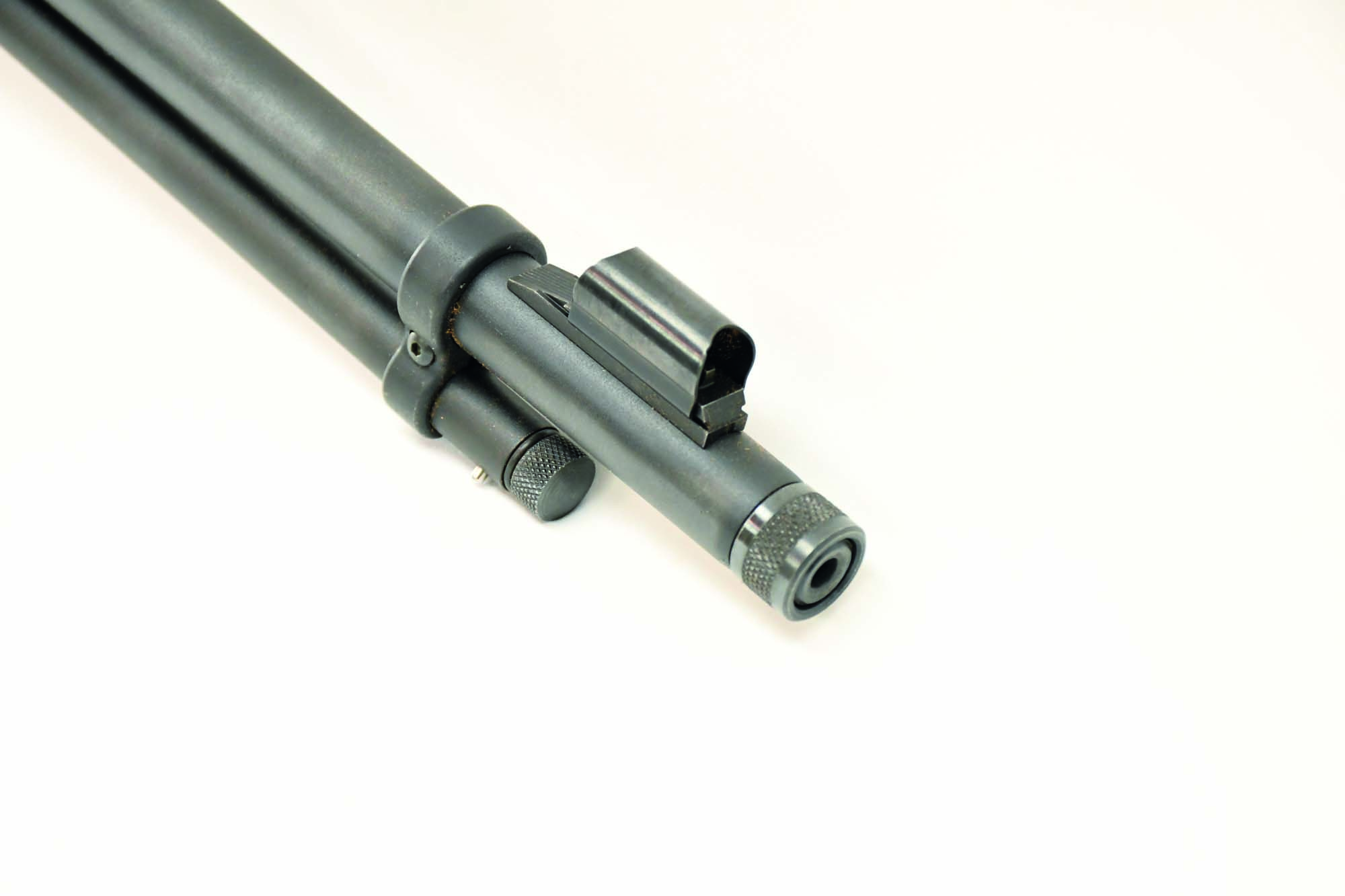
Enter the Savage Revel DLX, the deluxe version of Savage’s lever-action rifle (and yes, “Revel” is “lever” spelt backwards). My test rifle came in .22LR, although .22WMR and .17HMR versions are also available. This .22LR variant features a ½”x28 threaded muzzle at the end of its barrel, along with a shrouded blade sight that allows for fast-fire fun. The rear sight notch is adjustable for elevation, and all external metalwork is finished in a deep, rich black. The aluminium components are smooth, while the steelwork is matte. A secondary barrel band supports the under-barrel magazine tube.
The steel barrel fits into an aluminium receiver with a right-side ejection port and a sliding bolt nestled within. The bolt features a right-side extractor claw and a positive mechanical ejection system, flinging spent cases far and wide for ultra-fast operation. Four threaded holes sit atop the receiver to allow for optional Picatinny rail fitment, making it easy to mount optics if desired. I chose to leave it bare, reconnecting instead with the raw and rewarding challenge of using iron sights.

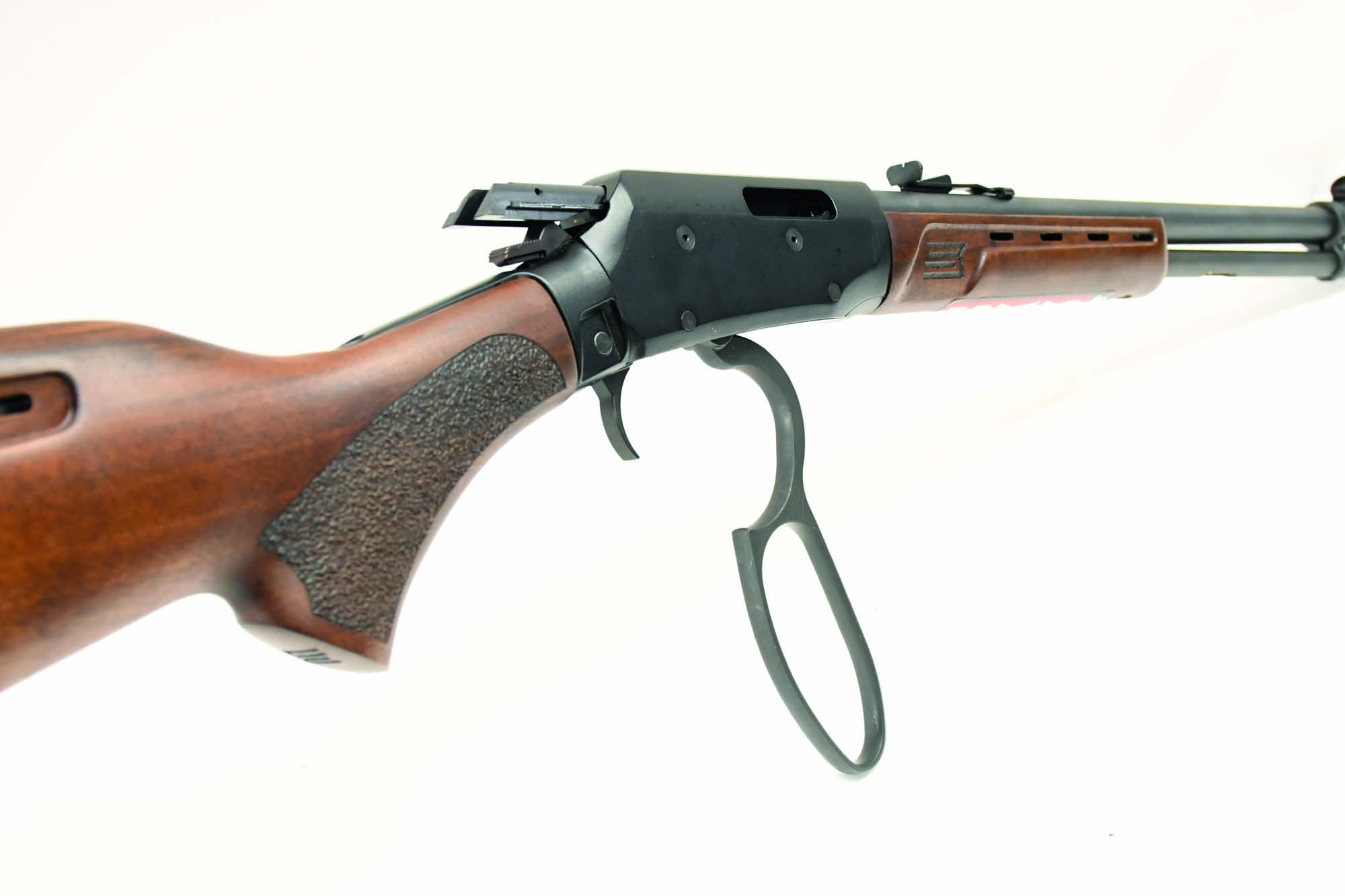
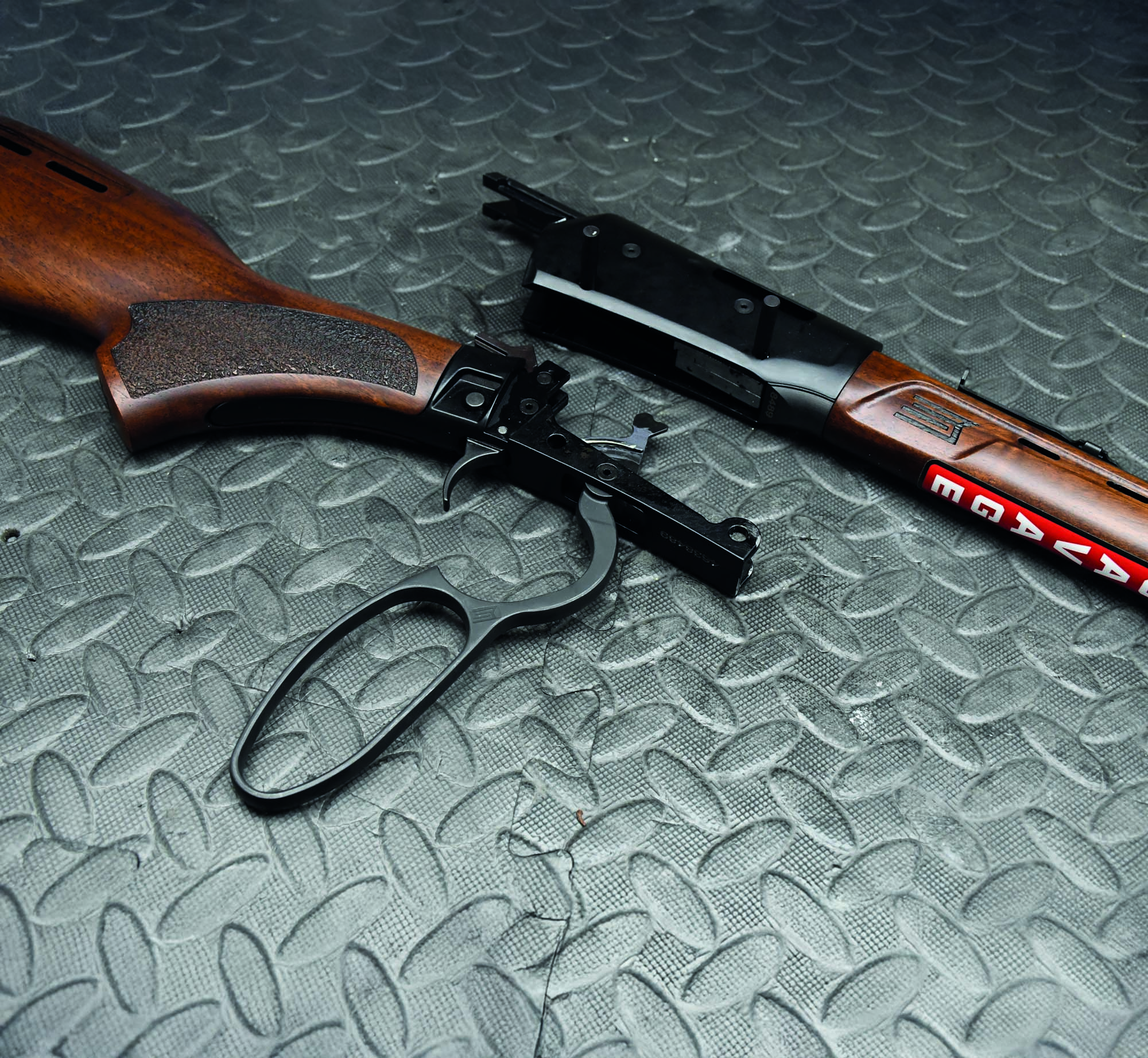
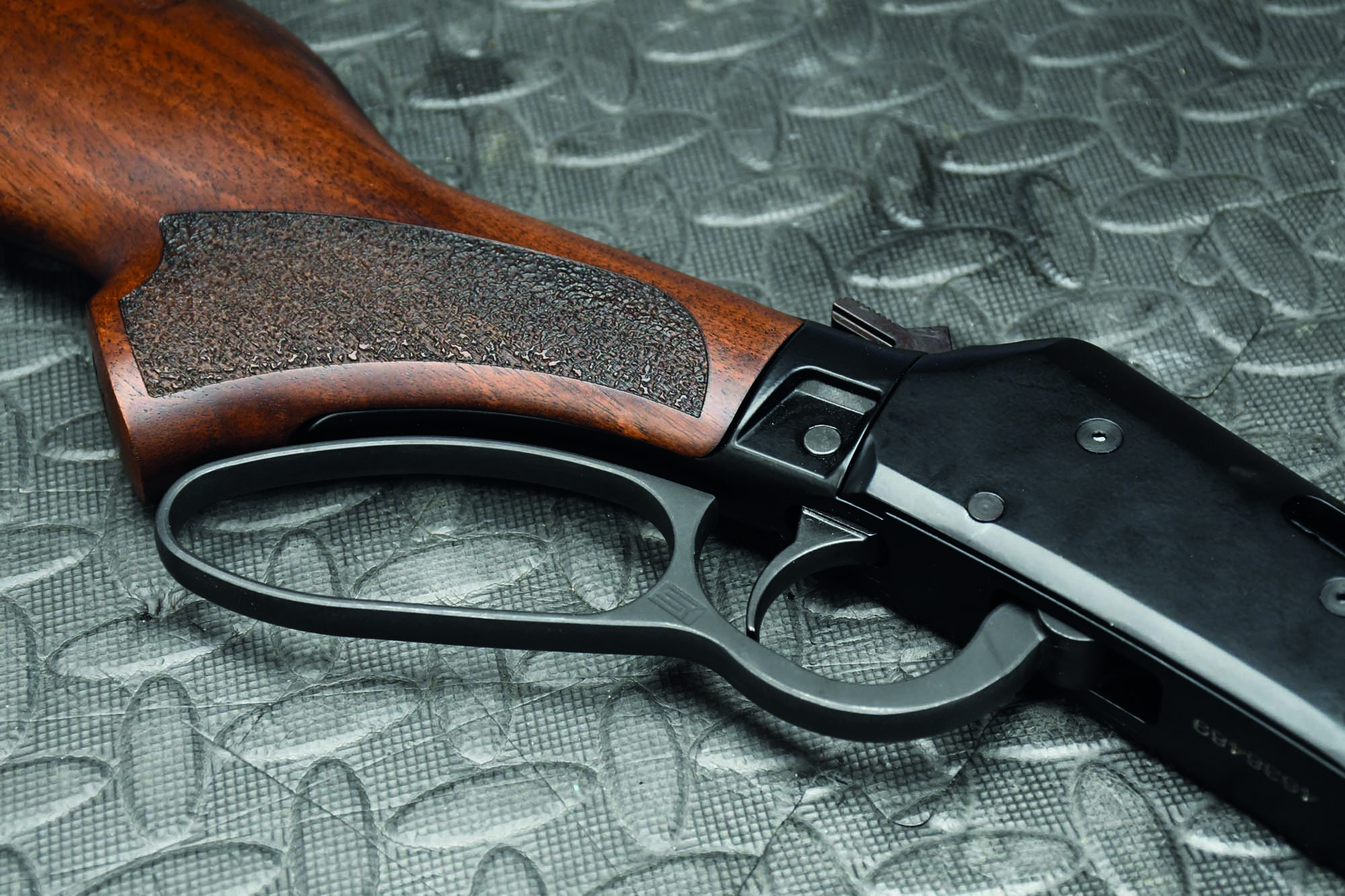
The action design remains sleek. The die-cast receiver has a lightly dappled finish, with visible steel screws and pins anchoring the internal mechanism. If you slide out the two lower, dimple-ended pins (which remain captive), you can separate the upper and lower receivers for cleaning or compact storage. The oversized cocking loop and generous trigger guard allow for quick, gloved operation. Cycling the action is smooth, with no mechanical drag.
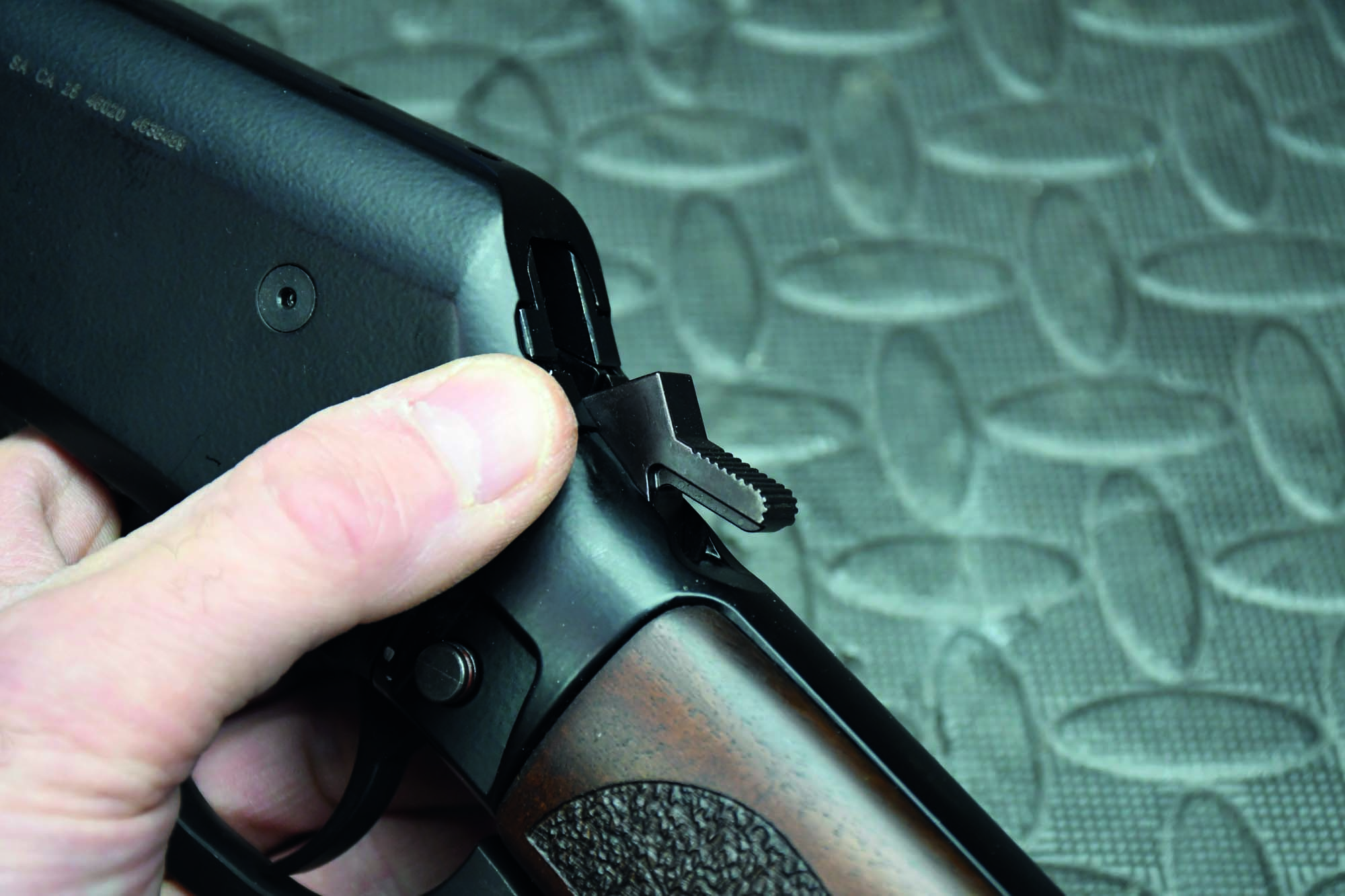
The trigger is a single-stage unit, and it exhibits a bit of movement before a predictable break at 1,230g (approximately 43oz). You can see the travel, but you don’t feel it, and a gradual squeeze ensures consistent reliability. A cross-bolt safety is located just above the trigger blade.
The tubular magazine holds 12 rounds of .22LR. It’s accessed by turning the serrated cap near the muzzle anti-clockwise, releasing a bayonet-style detent. The spring-loaded inner tube can then be slid partially out, and I recommend leaving the last 100mm in the rifle. Rounds are then loaded sequentially into the shaped cutout, where they will naturally fall back toward the action if the gun is pointing slightly upward. Once full, return the brass plunger and re-lock it. Cycle the lever, and the rifle will feed flawlessly from the tube without damaging the rounds. The mechanism automatically cocks the external hammer, though manual cocking and de-cocking are also possible.
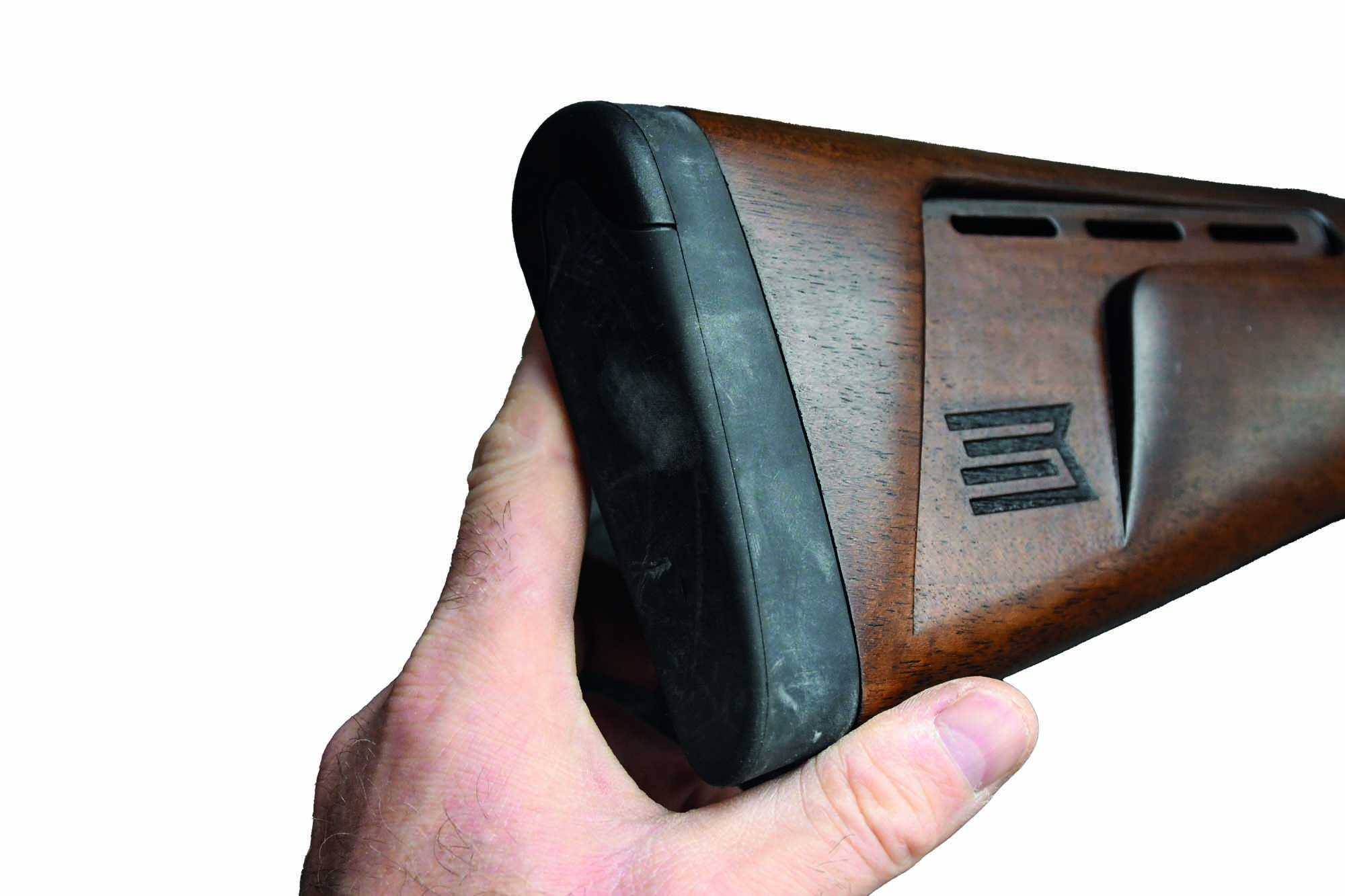
The aluminium tang sits centrally in the straight-hand walnut stock, which offers a generous 14.85” (375mm) length of pull. The firm but grippy rubber recoil pad includes a hard polymer heel insert, ensuring the rifle mounts cleanly without snagging clothing. The walnut stock is fully ambidextrous and features stippling at the grip for tactile control. The open-radius grip naturally aligns your hand, and your fingers pass easily through the cocking loop. Stylised slots in the comb and fore-end add visual flair, representing modern touches on a traditionally styled rifle. Savage’s logo is engraved on the grip base and sides of the slender fore-end, which also features finger grooves for added control.
For testing, I used Remington’s subsonic hollow points and Ranch Hand ammunition in the 18” (457mm) barrel, which I believe is the ideal length for standard velocity .22LR rounds. It is long enough to maximise performance without sending them supersonic. It’s also great for maintaining a longer sight radius for improved iron sight precision while keeping the rifle compact and nimble.

This rifle is not designed for pinpoint accuracy when used without a scope, but the barrel is more than capable of producing tight groups, provided the shooter does their part. Open sights are undeniably more challenging to use, but they offer a level of satisfaction that is hard to match. That is the real joy of this rifle. It doesn’t just ask for your attention; it demands your focus. There is no relying on technology here, just you, the rifle, and the target. And when it all comes together, the result is incredibly rewarding.

Of course, being a .22LR makes this rifle accessible to a wide range of shooters across all sizes and skill levels. For me, it’s been one of the most fun rifles I’ve shot in years. I didn’t add any accessories and was genuinely surprised by how quiet the rifle remained, even without a moderator, when firing subsonic ammunition. The rounds remained nicely at 1,065fps, so no crackers at all. However, if you want a bit more speed and power, the Ranch Hand ammo managed 1,223fps. Both ammo types use 40gr bullets, so that’s exactly 100ft/lbs for the hollow point subs and 1,32ft/lbs for the Ranch Hand, which are a little noisier. Of course, you can add a moderator, making the rifle virtually silent with the subsonics, and you’ll likely hear more of the target or quarry impact noise than that of the gun.
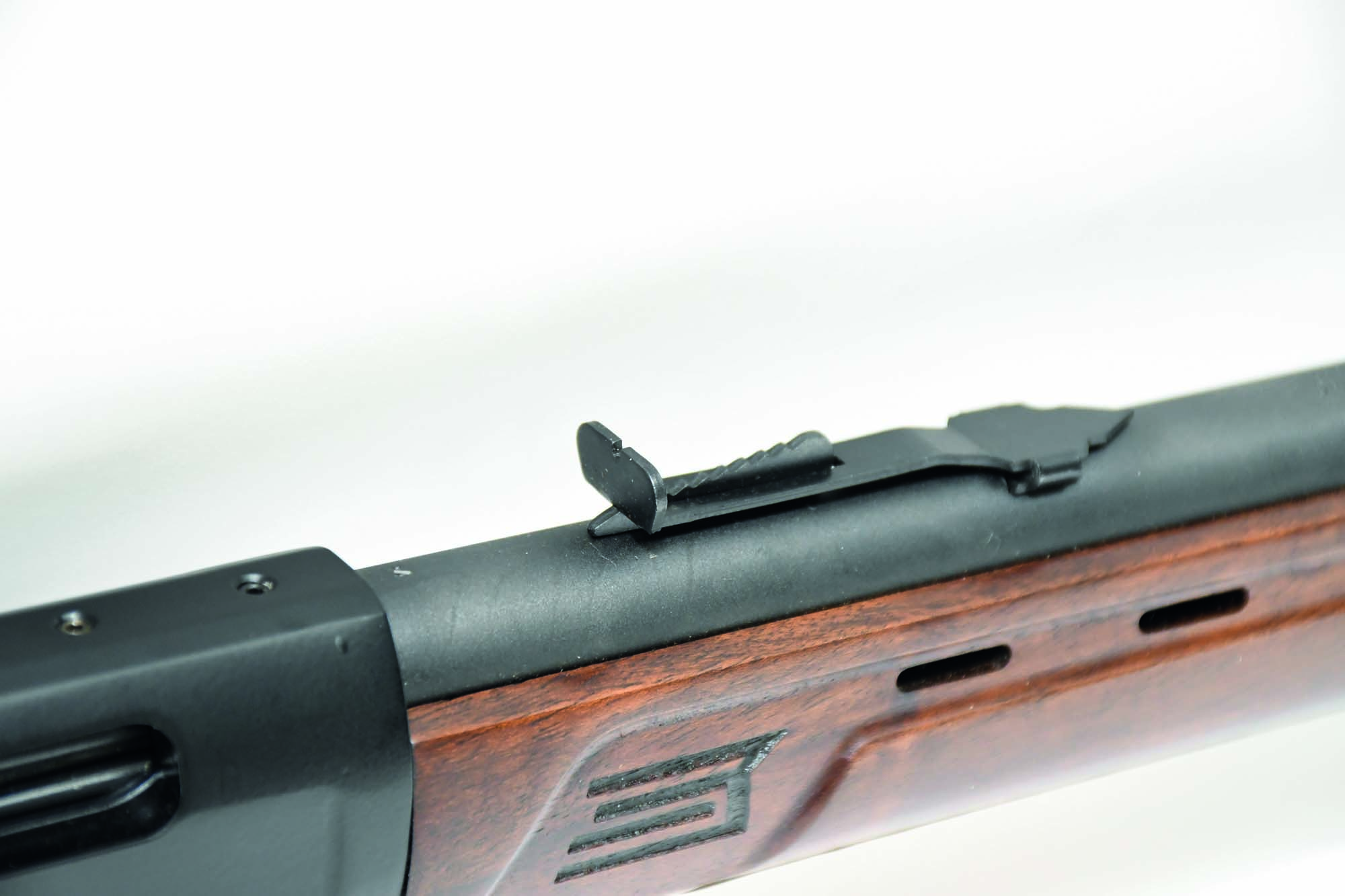
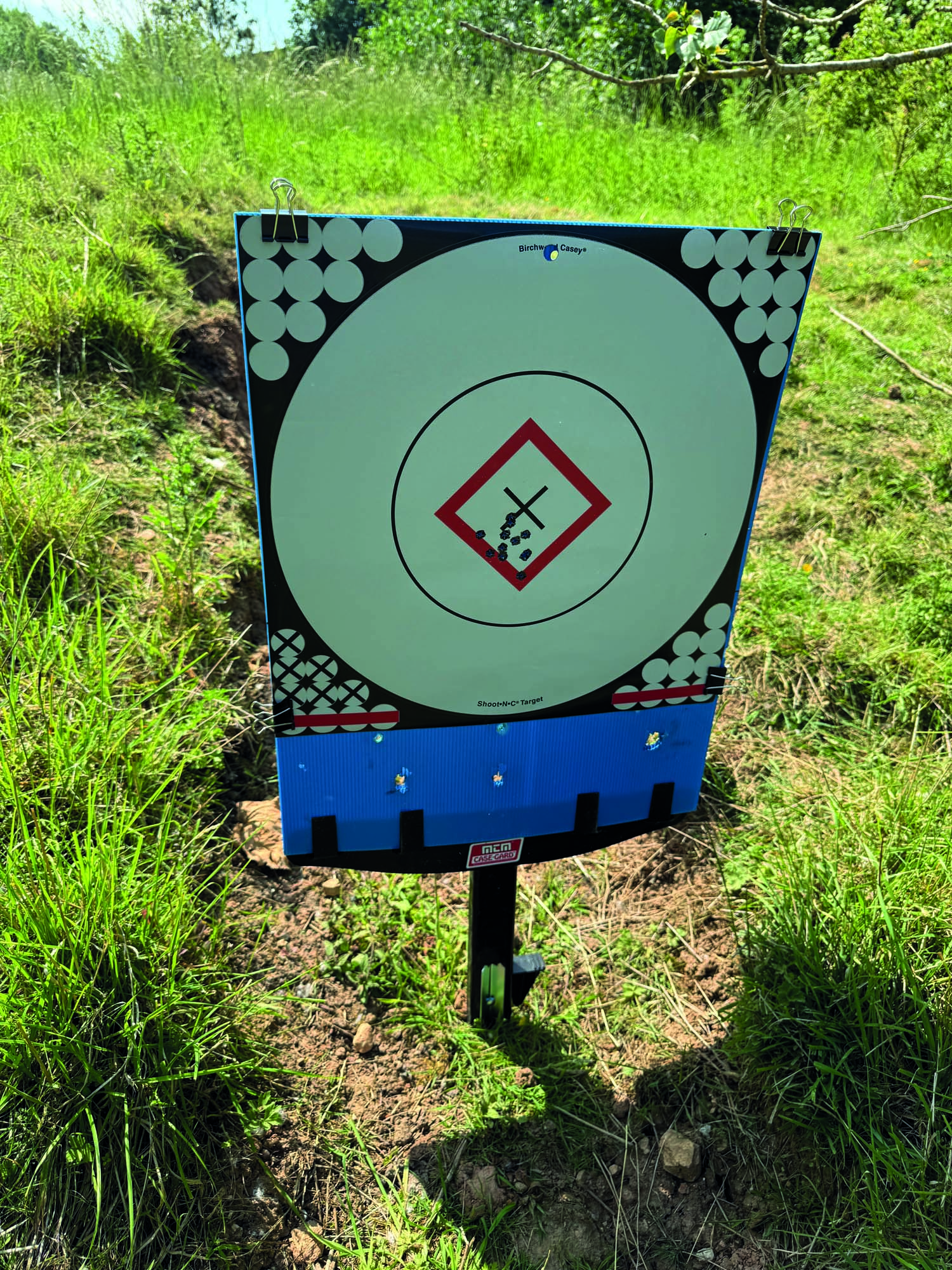
I shot the groups from 30m and used large Birchwood Casey Shoot-N-C targets for two reasons: firstly, they made aiming easier as my eyes aren’t what they used to be; and secondly, the bullet holes were much easier to see. This is particularly important because the rear iron sight offers nine positions for elevation, and you need to experiment. The simple design shows a folded steel blade with a notch to align with the front sight. The elevation is adjusted by lifting the notched blade and sliding the underside wedge back and forth – very simple but in keeping with the traditional feel of the gun.
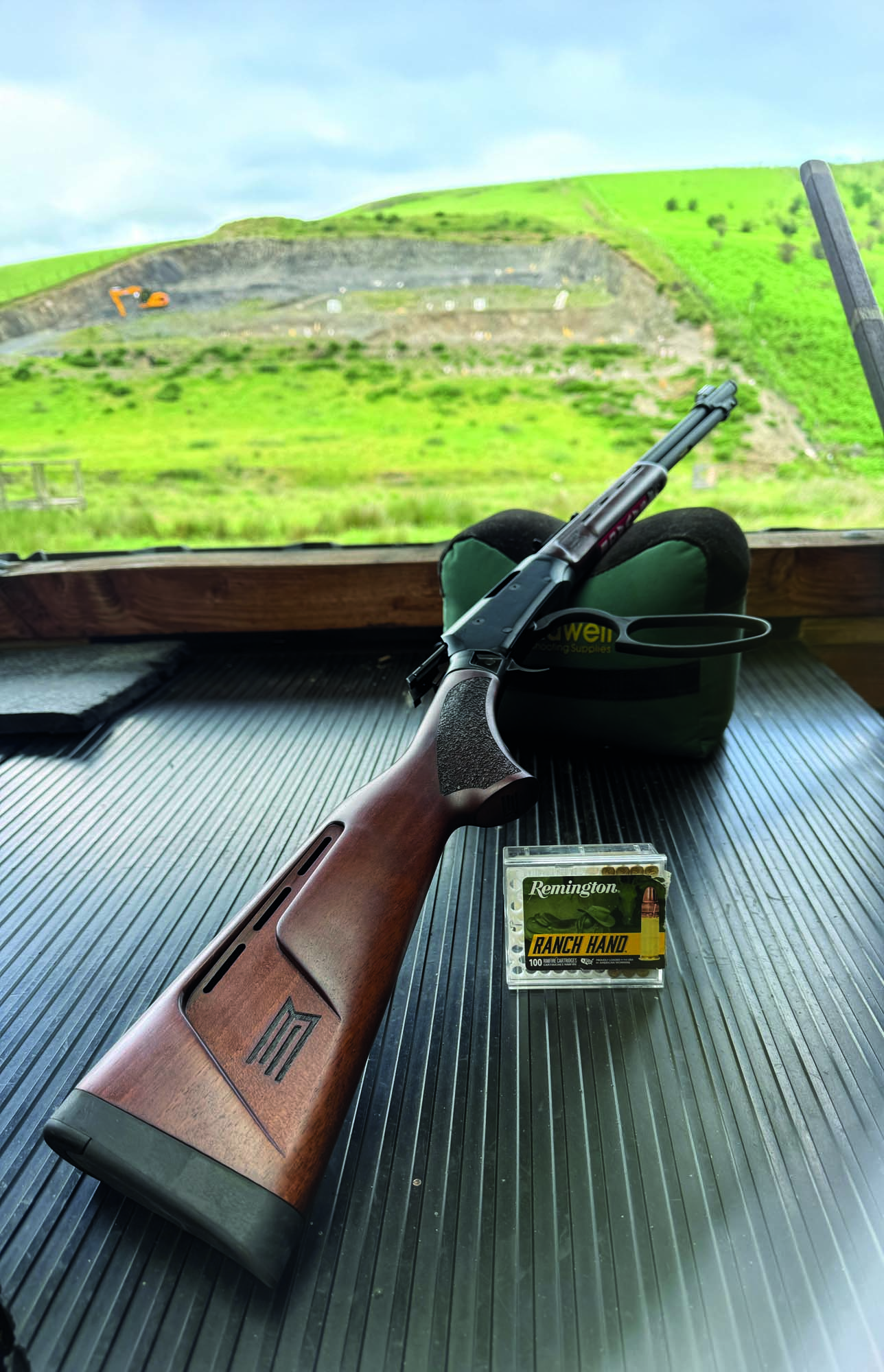
The front sight hood can be removed if you prefer, as it will slide back and forth, and this was a helpful benefit when shooting in differing light conditions. However, neither end is windage adjustable.
I’ve been using the rifle for a month, both indoors at my club and outdoors, and it has proved to be a real challenge. It has encouraged me to enjoy shooting for its own sake, rather than simply testing ammunition for group size. I’ve taken it out to 125m on steel gongs, although I’ll admit the targets were a metre square and I didn’t always hit them. If it had been a scoped rifle, it would have been far too easy. Flip targets for close-range plinking work brilliantly with this gun, and because of the inherent difficulty of using open sights, there’s little motivation to use premium ammunition. It’s a very economical way to have fun.
The steelwork has resisted any corrosion from skin contact, and the matte finish has prevented any reflected light from interfering with the sight picture in bright sunshine.
The cross-bolt safety is functional and blocks the trigger. The lever movement is smooth and silent, and I have to admit that, had I been using a Picatinny rail and a suitable moderator, I would have loved to take this rifle out rabbiting. It was a genuine pleasure to shoot and handle, weighing just 2.8kg (6lbs 4oz) with an overall length of 940mm (37”).
For transport, the rifle can be separated into two halves, allowing it to fit into a discreet case just 565mm (22.5”) long. That is a particularly appealing takedown feature for club shooters who need to travel discreetly in public places.
The rifle is fast to mount into your shoulder without snagging, and the cheekpiece has a traditionally low profile, allowing the eyes to align naturally with the iron sights. Some may or may not appreciate the styling details of the cut-outs on the butt and fore-end, but I think they break up the shape a little and advertise it as a new, modernised gun, not just a halcyon relic.

Disassembling the upper and lower sections for transport and cleaning is fairly straightforward, and it was notable that the feed mechanism remained relatively free of lubrication debris from the ammunition.
Ejection is completely reliable, and the steel cocking lever has solid stops at each end of its travel, allowing confident, deliberate use without fear of damage.

A simple, effective rifle that reconnects you with the joy and challenges of marksmanship. Success is no longer just about reading the wind at long range. Even at shorter distances, landing every shot in a single group without a flyer is highly satisfying, and it sets the stage for gradually tightening those groups further.