Gun Reviews >
 Find a Dealer >
 Find a Club >
 Competitions >
 videos >
 Reader Survey >
.223 Rem Ammo Test
- Last updated: 10/06/2023




One centrefire cartridge that keeps soldiering on is the indomitable .223 Rem. Starting life as an experimental military round for the new AR-15 and later M16, the .223 or 5.56mmx45mm cartridge was standardised in 1964. Soon after, sporting versions appeared on the civilian market as the .223 Remington. Chamber dimensions and pressures are different for the military version and they can accept higher pressures than the civilian version, so take note. The .223 filled the niche between .222 Rem and .22-250 Rem and would serve as an excellent all-round small game and varmint round. Making it a great choice here in the UK. Choosing the correct rifling twist rate is critical in order to make the most of the wide range of 0.224” bullet weights available. A 1:12” or 1:14” twist is used for the lighter bullets and 1:9, 1:8 or even 1:7” is used for the heavier bullets. The .223 cartridge is capable of pushing a 40-grain bullet at 3800 fps (for foxes etc), a 55-grain at 3250 fps (for Scottish Roe or small species deer) and a 75-grain projectile at 2800 fps (for long range targets). This makes it one of the most versatile cartridges around. Deer bullets have a heavier jacket facilitating controlled expansion and thus greater penetration, plus they cause less meat damage. The requirements set out in law for small deer species in England and Wales dictate a calibre no smaller than 0.240” and the bullet must weigh at least 50-grains and produce 1000 ft/lbs at the muzzle. For Roe deer in Scotland, you can also use a 50-grain bullet, but it must have a minimum velocity of 2450 fps and produce 1000 ft/lbs. All regions require the use of expanding bullets. For this article, I wanted to try some mid-weight ammunition to see how each make and weight performs down range.
Considering there was only 5-grains difference between the five cartridges tested, the performance was very different, hence the need to test and make an educated choice for your own actual needs and the game species you intend to hunt. This was borne out in the velocities. The Sako 50-grain obviously was the fastest at 3348 fps, due to its lower weight, but the other four 54 or 55-grain loads varied by as much as 245 fps. The Winchester Ballistic Silver Tip were the fastest of this group at 3210 fps, while the Sako 55-grain were the slowest at 2965 fps. However, downrange performance, trajectory, penetration and accuracy are just as important as speed. All the cartridges met the deer legal velocity/energy/weight requirements mentioned earlier. Accuracy-wise, using my Sako Vixen custom, all 5-shot 100-yard groups were below an inch, which is very impressive. The best group size measured 0.65” and went to the Sako 50-grain Game Head Varmints. The rest all grouped between 0.75” and an inch. Here, you can choose a fast expanding bullet for fox/vermin or a deer-focused projectile with a heavier construction, slower expansion and a higher retained bullet weight. This is demonstrated well by the two Sako loads. Both have the Game Head series bullet but one is a 50-grain Varmint and the other is a 55-grain soft-point. At 3348 fps | 1245 ft/lbs, the 50-grain Sako only took 0.35” to start expanding in the ballistic media (meaning it is just right for thin-skinned foxes or vermin), while the 55-grain started to expand at 0.95”, meaning it penetrated more before expanding, making it a better choice for small deer. To add to the evidence, the 55-grain soft-point Sako penetrated all 8.0” of the media, with the controlled expansion creating a wound channel measuring 1.5” wide and 4.05” long (a total volume of 96 mls). To re-enforce the bullet construction is key theory, the retained weight of the 50-grain Game Head Varmint was only 18.8-grains, whilst the 55-grain Game Head soft point retained 40.6-grains of its original 55-grain weight. Excellent. However, a heavier bullet can expand rapidly if it is constructed to do so and is driven fast enough, like the Winchester Ballistic Silver Tip, whose 55-grain bullet was second fastest at 3210 fps | 1259 ft/lbs and gave the second largest wound channel at 165ml. It started to expand at 0.55”, with a wound channel measuring 2.75” in width and 3.0” in length, all within a short 4.5” of total travel. Retained bullet weight was 14.5-grains, so it literally blew up. The RWS T Mantel and Norma Tip Strike had similar velocities of 3099 and 3025 fps, respectively. However, the wound channels varied, as did the retained weight (See Penetration Tests Table), again showing the huge difference between a rapidly expanding bullet and one that offers controlled expansion.
Hopefully, this article shows what the .223 rifle cartridge is capable of. If you are after crows or foxes, where a faster expanding bullet is needed, then the Sako 50-grain Game Head or Winchester Ballistic Silver Tip are ideal. A good small deer species load would be either the RWS T Mantel or Sako’s larger 55-grain Game Head soft-point. Norma’s Tip Strike would be a good all-rounder in my view as it shows impressive performance also.

click on image to enlarge

click on image to enlarge
SAKO GAME HEAD SOFT POINT 55-GRAIN
By comparison, this load uses a Game Head bullet that's 5-grains heavier and shows a more conventional soft-point (lead) meplat and a flat base. It is designed for slower, more controlled expansion, making it ideal for small-species deer. Listed as doing 3170 fps, the bullet weighs in at 55.0-grains and is shorter than the tipped version at 0.6825”. This is due to the more rounded tip.

RWS T MANTEL 55-GRAIN
This rifle cartridge features a 55-grain bullet utilising the famous T Mantel design, with a flat base, soft lead meplat and Tombac-plated steel jacket. Designed to offer controlled expansion and deep penetration, it's another good small deer species option. The listed velocity is 3281 fps with a bullet that weighs 55.4-grains. The projectile is propelled by 23.0-grains of irregular extruded powder.
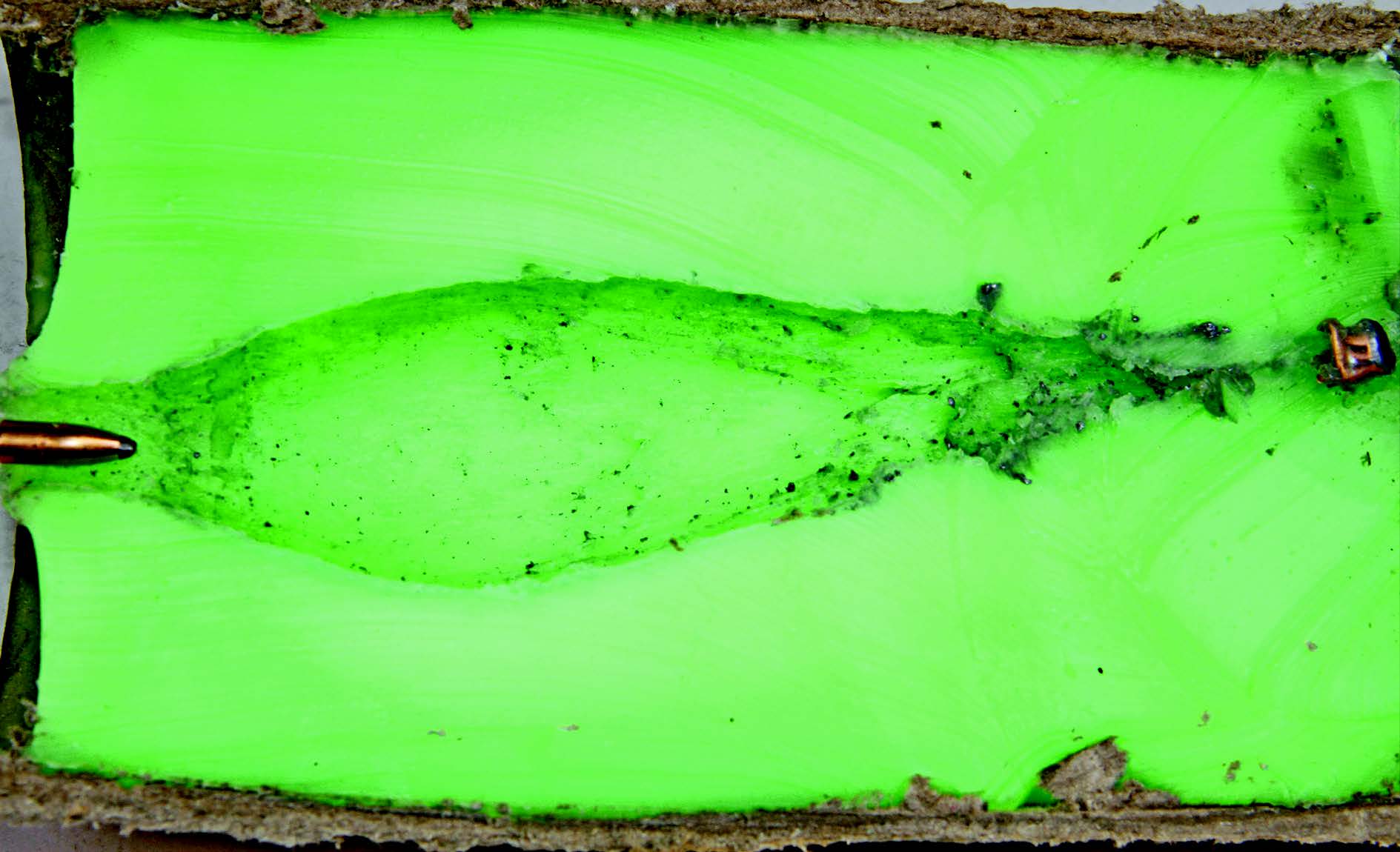
NORMA TIP STRIKE 54-GRAIN
This ammo features a 54-grain (55.8-grain when weighed) bullet that's propelled by 24.4-grains of extruded powder for a listed velocity of 3215 fps. It utilises Norma’s Tip Strike technology and the projectile shows a large, orange polymer tip and a flat base. It is designated as a Varmint round, however, it also does well as a small species deer load.
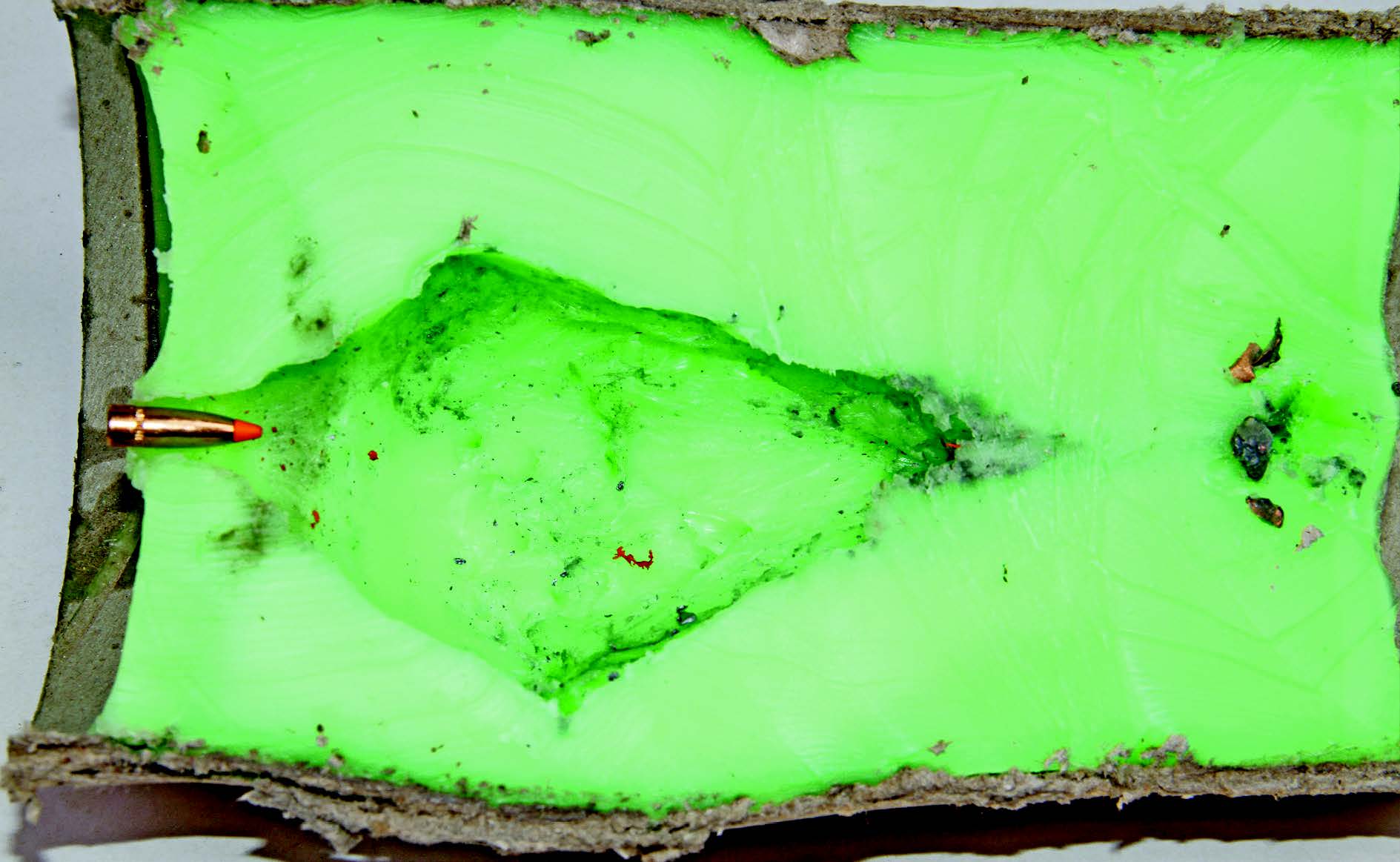
WINCHESTER BALLISTIC SILVER TIP
This cartridge uses Winchester's very distinctive nickel-washed brass case and black Lubalox bullet jacket coating, which reduces fouling. The projectile features a silver polymer tip with a boat tail and is a varmint load designed with fast bullet expansion in mind. 24.2-grains of flattened ball powder means a muzzle velocity of 3240 fps.