Gun Reviews >
 Find a Dealer >
 Find a Club >
 Competitions >
 videos >
 Reader Survey >
Hull’s Very Low Recoil (VLR) cartridges - Very Lovely Round!
- Last updated: 07/08/2024



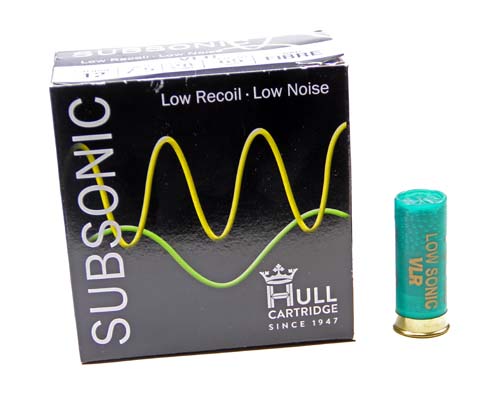
If you think about the lethality of any round, then going slower is not often the first train of thought. However, with low velocity comes light recoil and low noise levels, so, for pest control, they can be a real asset. Also, they can be easily silenced too, which is why Hull’s Very Low Recoil (VLR) 12-gauge rounds are such a versatile asset to have in your ammo cabinet. Prices start at around £339.00 per 1000.
Specification
The excellent Hull VLR loads use a 28-gram fibre-wadded load in a see-through green 65mm case packed with No. 7.5 shot size only. They feature a high-quality six-star crimp for secure closure and maintain consistent back pressure, all combined with a standard 16mm brass head size. The brass head has a good lip to it, so extraction and ejection are assured. Overall, the whole cartridge is very uniform in manufacture. Some newish semi-autos might struggle with the lower velocity though, so you will just have to shoot some and see.
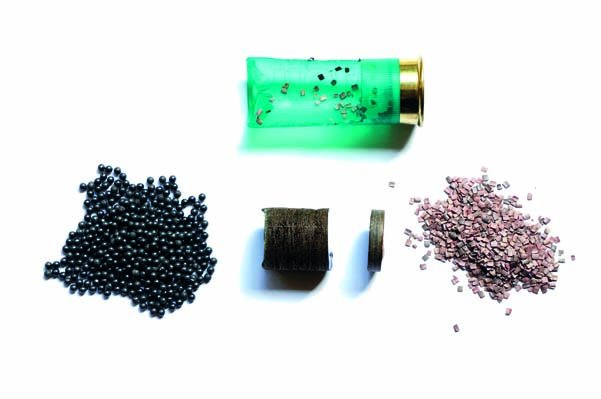
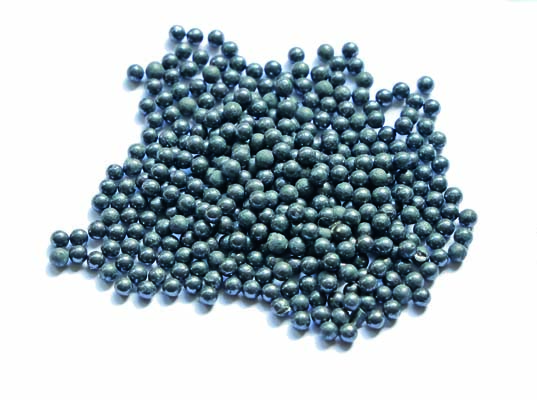
Internally, you have a pinkish-beige flake powder of uniform cut and size. It’s under a card separator, and then a dense fibre wad fulfils its biodegradable status out in the field. The 28-grams of shot sits on top of the wad and the lead shot is very uniform, as expected from Hull. The No. 7.5 shot (2.3mm) size means a total of 370 pellets are in each cartridge. The actual lead pellets are outsourced but undergo a stringent quality control regime, and raw materials are derived from recycled sources. The control of diametric tolerances ensures that shot sizes have a true spherical tolerance, so the shot travels through the air straighter, producing denser and more even patterns. Varying the antimony content ensures the correct shot hardness is achieved, 2% in this case. The powder charge is ignited by the CX range of primers, which are globally acknowledged as the most reliable and consistent on the market today.
Performance
As expected, the muzzle velocity is a sedate 1020 fps from a 28” barrel, with a remaining velocity of 755 fps at 20 yards, 650 fps at 30 yards, and only 561 fps at 40 yards. As such, the energy per pellet also drops from 2.7 ft/lbs at the muzzle, to 1.48, 1.1, and 0.80, respectively. So, you can see it’s a short-range cartridge, but it is also very safe to use around the farm where collateral damage is a concern when shooting regular full-power cartridges. Due to its low recoil and noise levels, this load is well-suited for teaching new students how to handle a 12-gauge shotgun, without causing shoulder discomfort or too much noise.
The other benefit of this loading is that its subsonic status allows the use of a sound moderator for maximum noise reduction. When used in combination with a suppressed shotgun, they are spectacularly quiet and my top choice. However, being subsonic, a curious phenomenon means that they tend to shoot a little higher in a silenced gun, giving a little more upward bias to the fall of shot on the pattern boards. Of great merit is also the fact that the second or third shot is easier to administer due to the minimal recoil. I have always found subsonic loads to have dense and well-distributed patterns, which is another bonus.
It’s also good to have a box of these cartridges on hand if you’re out rough shooting or you get the chance to shoot at pests or squirrels around the farm. The dense shot pattern and the number of No. 7.5 pellets make for a clean kill at shorter ranges, especially when using a full choke.
Field test
Due to the low velocity, I would recommend a ½ to full choke for this loading, as it offers the best all-around patterns down range. Using a Mossberg pump-action shotgun with an A-TEC sound moderator fitted (full choke), we had an even pattern with an upward bias, and 339 pellets hit the board. 113 were clustered in the inner ring and 226 were spread around the periphery.
Next up, we used a full-choked sound moderator from Saddlery and Gunroom. We counted a total of 291 pellet strikes at 30 yards, with 208 outer hits and 83 inner strikes. Also, I did try a ½ choke on a Browning Shadow and this produced a wider, less dense pattern. There were 231 strikes, with 57 inners and 174 outers.
In use, the cartridges are so mild to shoot, and even without a moderator, the carry-on noise is vastly reduced. When used with either sound moderator, the gun’s report was obviously spectacularly quiet. In fact, we thought we had a misfire several times, as the noise resembled a hollow rush of hot air. With or without a moderator, these VLR rounds can be shot all day without fatigue to the shoulder. They are great for youngsters or shooters with a smaller frame and many use them for simulated game days where the shot counts are always very high.
Conclusion
This is my go-to 12-gauge subsonic loading at the moment, as it is so consistently quiet in warm or cold weather conditions. Plus, it always patterns superbly well. I appreciate the low noise and low recoil, especially if ratting and shooting at an awkward angle in a barn, where a full 12-gauge load would thump you. Great value and excellent performance. Overall, a Very Lovely Round!

click on image to enlarge

click on image to enlarge
click on image to enlarge
click on image to enlarge

click on image to enlarge

click on image to enlarge

click on image to enlarge