Gun Reviews >
 Find a Dealer >
 Find a Club >
 Competitions >
 videos >
 Reader Survey >
BSA XT-SL review: Birmingham’s first tactical air rifle
- Last updated: 24/08/2026




Mark Camoccio gets a first look at BSA’s brand new tactical model, the £999 regulated XT-SL, and finds a rifle that beats its own claimed shot count by 32 and cycles as smoothly as anything he has used.
A new BSA is always worth clearing the diary for, so when the offer came to take delivery of the latest model and run a test, I did not need much persuading. This is the XT-SL, and it is a bold move by Birmingham standards, because it is the company’s first tactical rifle.
Simon Moore, BSA’s managing director, filled in the detail, and it is clear he is heavily invested in this one. He sees the tactical end of the market as somewhere BSA has to be properly represented, and the XT-SL is the answer. There are echoes of the recent Airsport-SL – the same bottle, the same moderator, the same generous use of polymer – but the two rifles are worlds apart in intent.
The box holds instructions, one magazine and, yes, a sound moderator as standard. XT stands for Extra Tactical, which explains the buffer tube and butt stock componentry and that distinctive grip. The intent is obvious, and while the temptation is to talk about AR detailing, BSA’s own name for it is the Sporting Tactical Rifle.
Prices are RRP at the time of publication and may since have changed.
The XT-SL is a sporting tactical model, which in BSA’s language means a hunting rifle first. Everything is matt black bar the chemically blued barrel and rear buffer tube receiver, which makes practical sense in the field. The main polymer forend chassis is made in the UK and feels pleasingly dense. BSA’s moderator screws to a 1/2in UNF thread up front and gets the same matt treatment. A 300cc carbon-fibre bottle is standard, with a 480cc carbon bottle and a slimline 200cc aluminium bottle offered as upgrades.
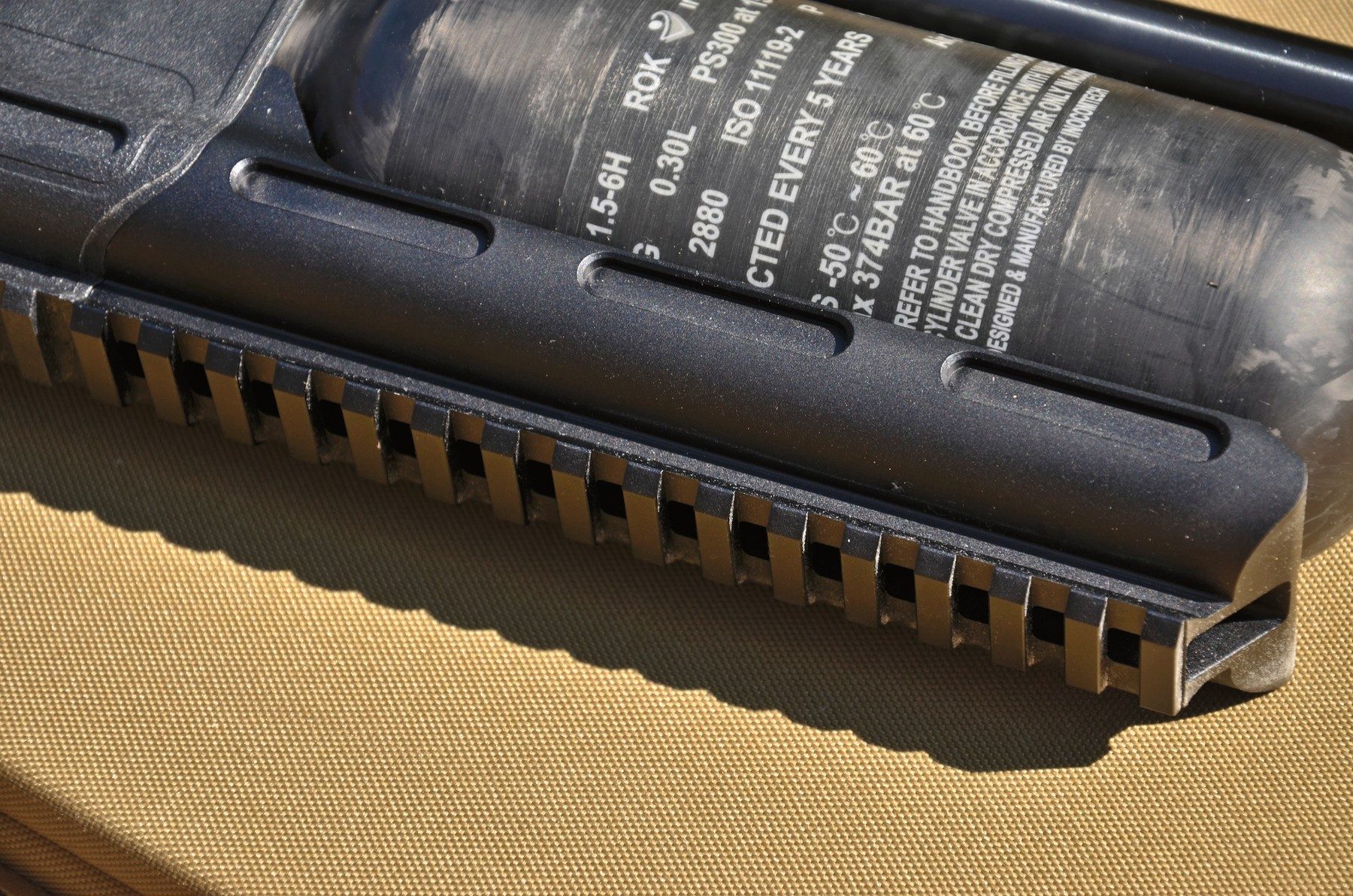
That aluminium accessory rail up front is an optional extra.
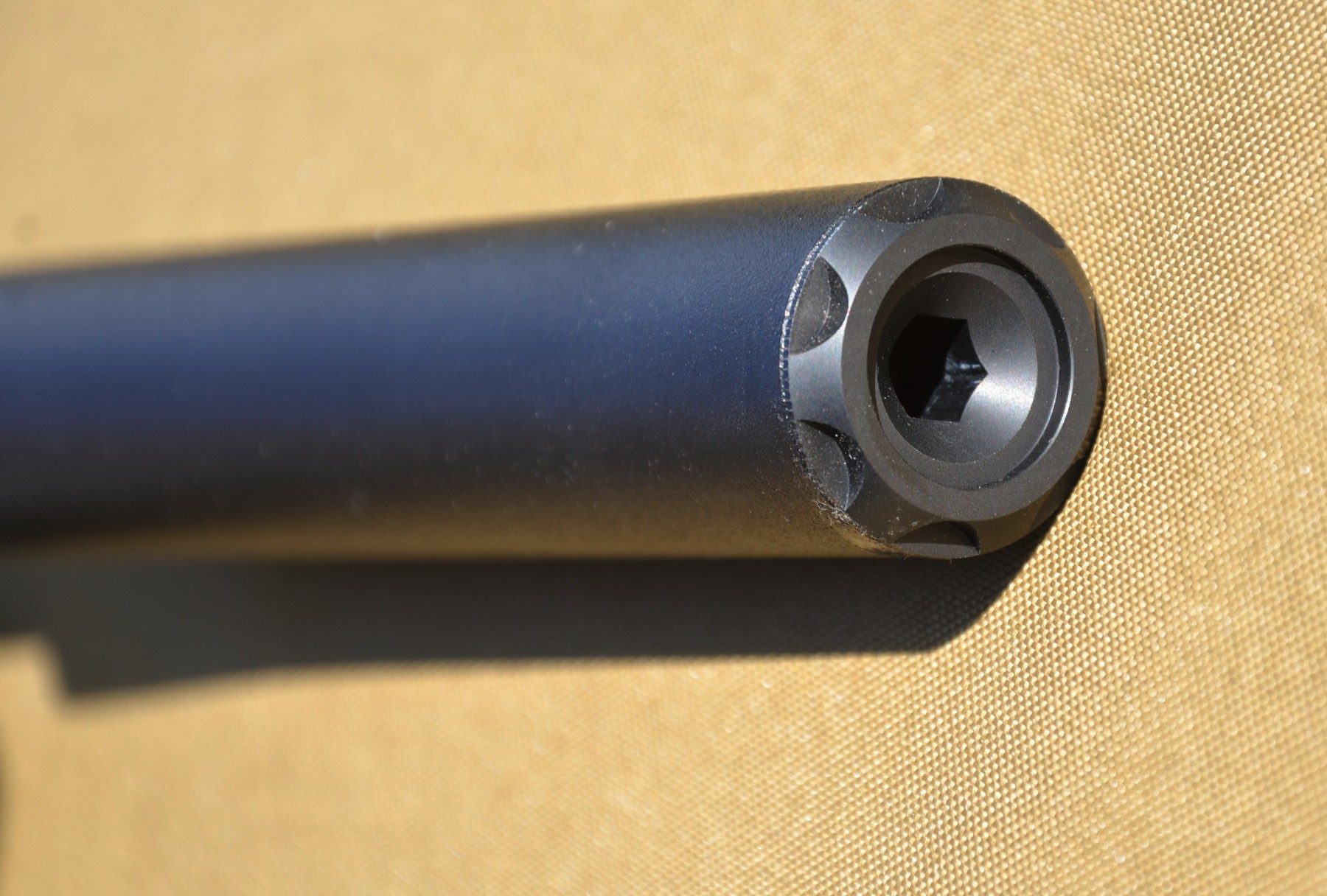
BSA’s highly effective sound moderator is all part of the package.
Which brings us to the buffer tube and butt stock. Squeeze the spring-loaded catch halfway along the underside and the length of pull adjusts across six anchor points, giving up to 3.5in of travel. There is deliberate resistance built into the movement, so it takes a firm hand to shift, but the pay-off is that nothing rattles or shifts once it is set, unlike some rival designs.
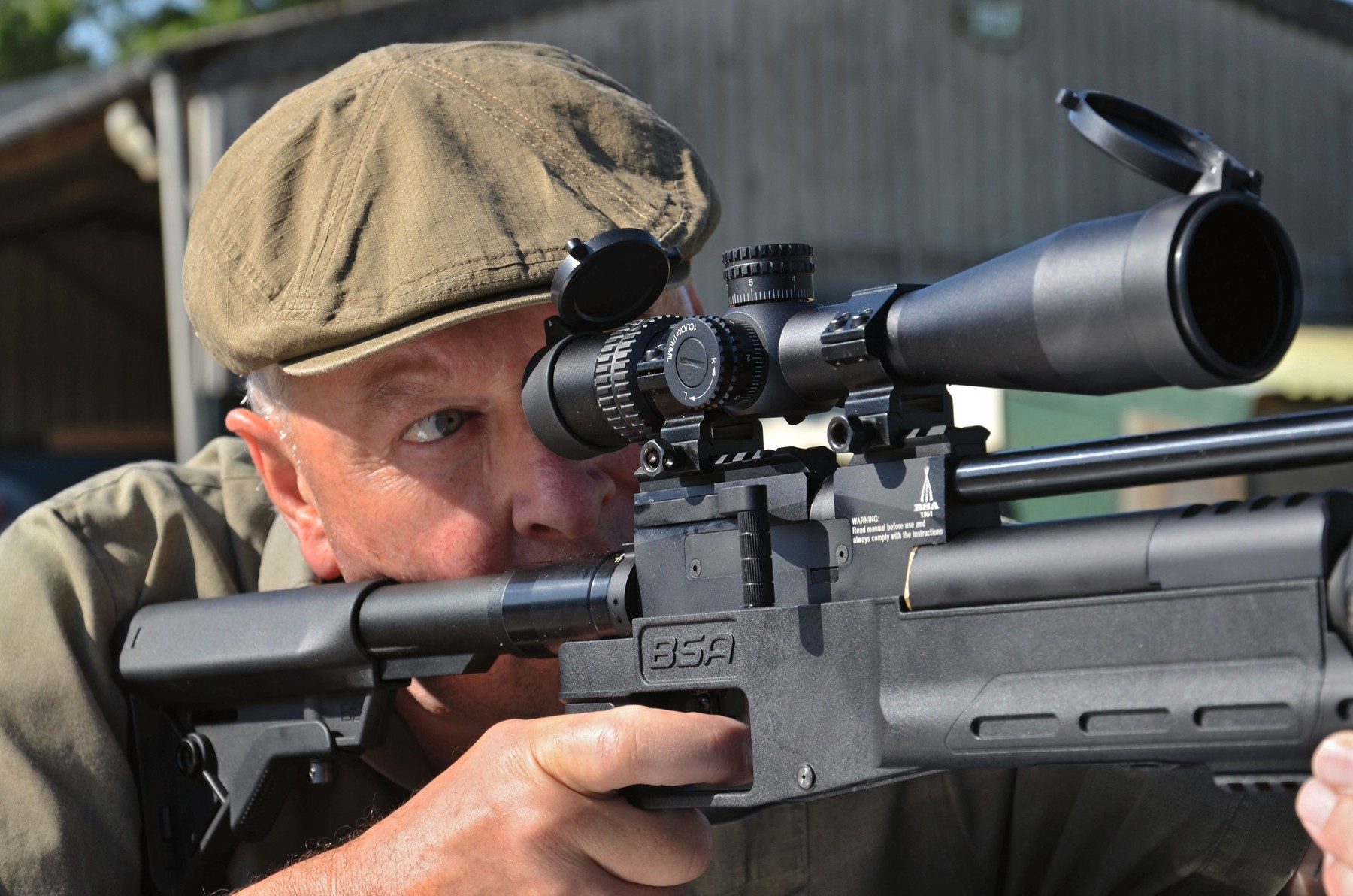
That adjustable rear stock means a perfect fit every time.
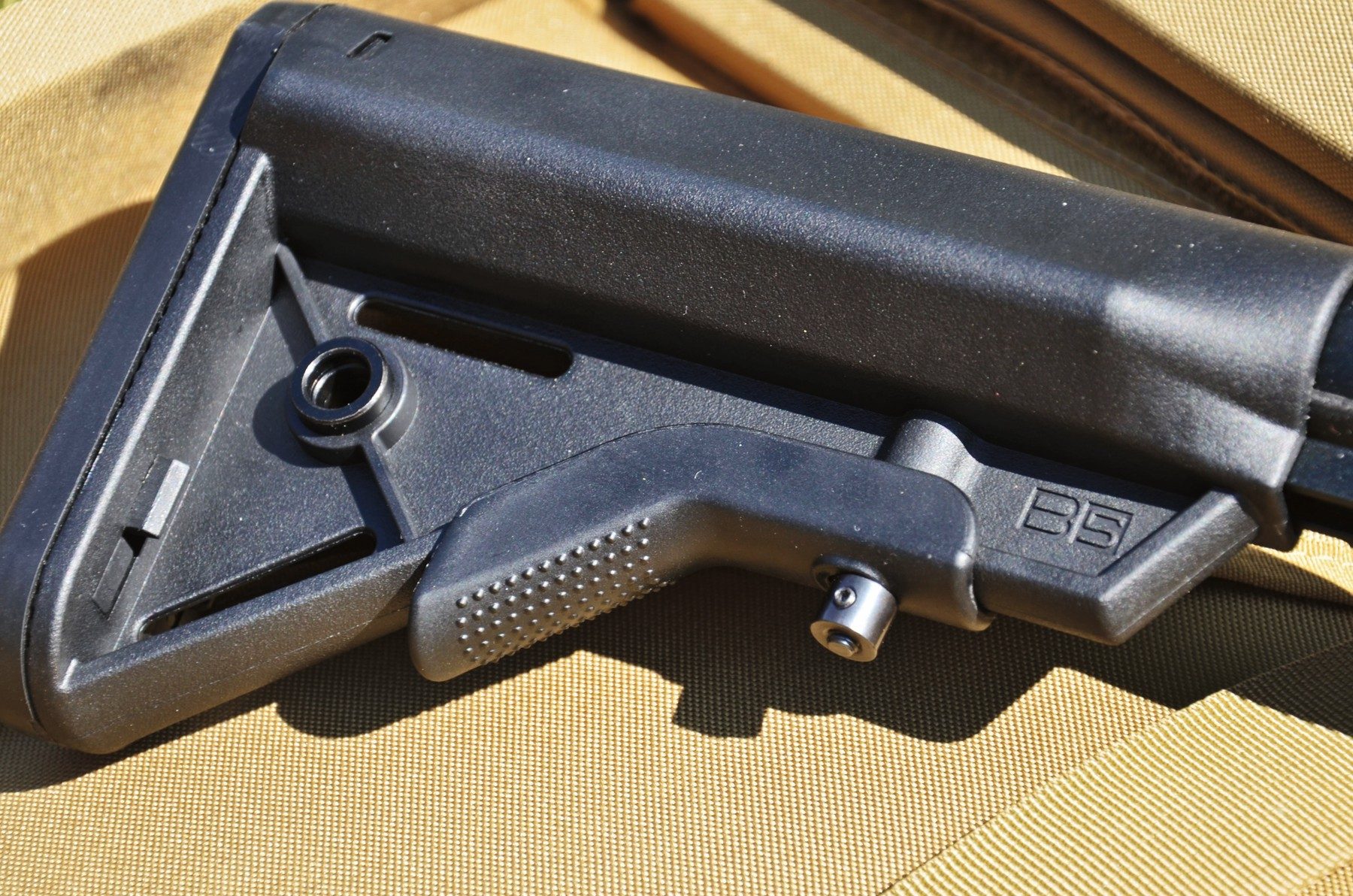
Note the bottom catch, which allows adjustment to length of pull.
My one reservation is the absence of an adjustable cheekpiece. BSA’s reasoning, when I put it to them, was cost: get shooters on board at the price, and let them customise later. In fairness, scope and head alignment gave me no trouble at all over the course of the test.
The layout also means the whole rear end can come off and be replaced with another compatible butt stock. Further options include an additional aluminium Picatinny rail, which was fitted to my test rifle and bolts on up front. It is one of the optional extras, made by BSA, and beautifully machined. Look closely and you will find a short run of Picatinny moulded into the forend anyway, so this comes down to taste and need. The aluminium rail is the business, though, and adds both a classy finish and better handling up front.
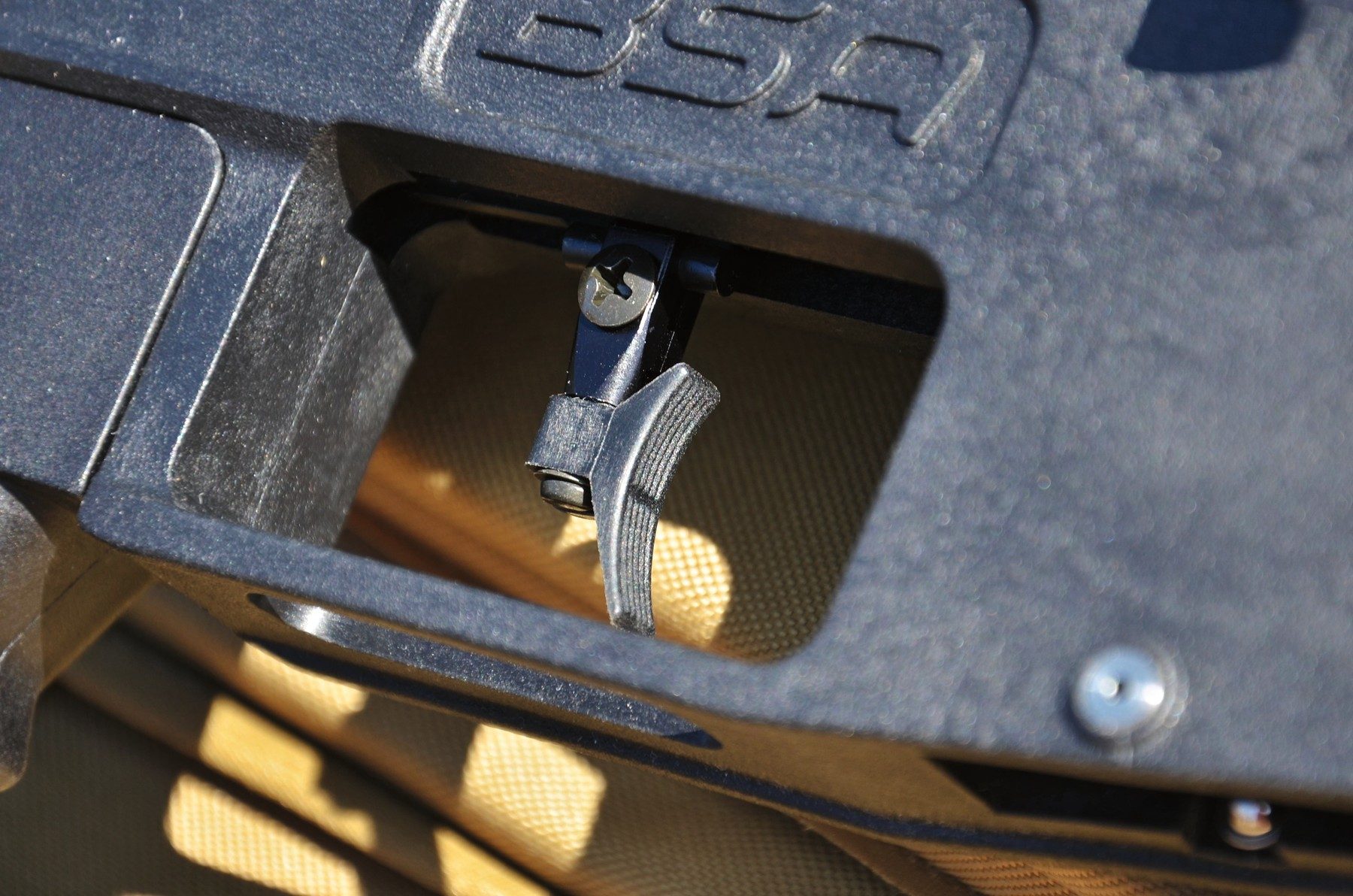
BSA has long fitted quality triggers; this one gets an adjustable shoe.
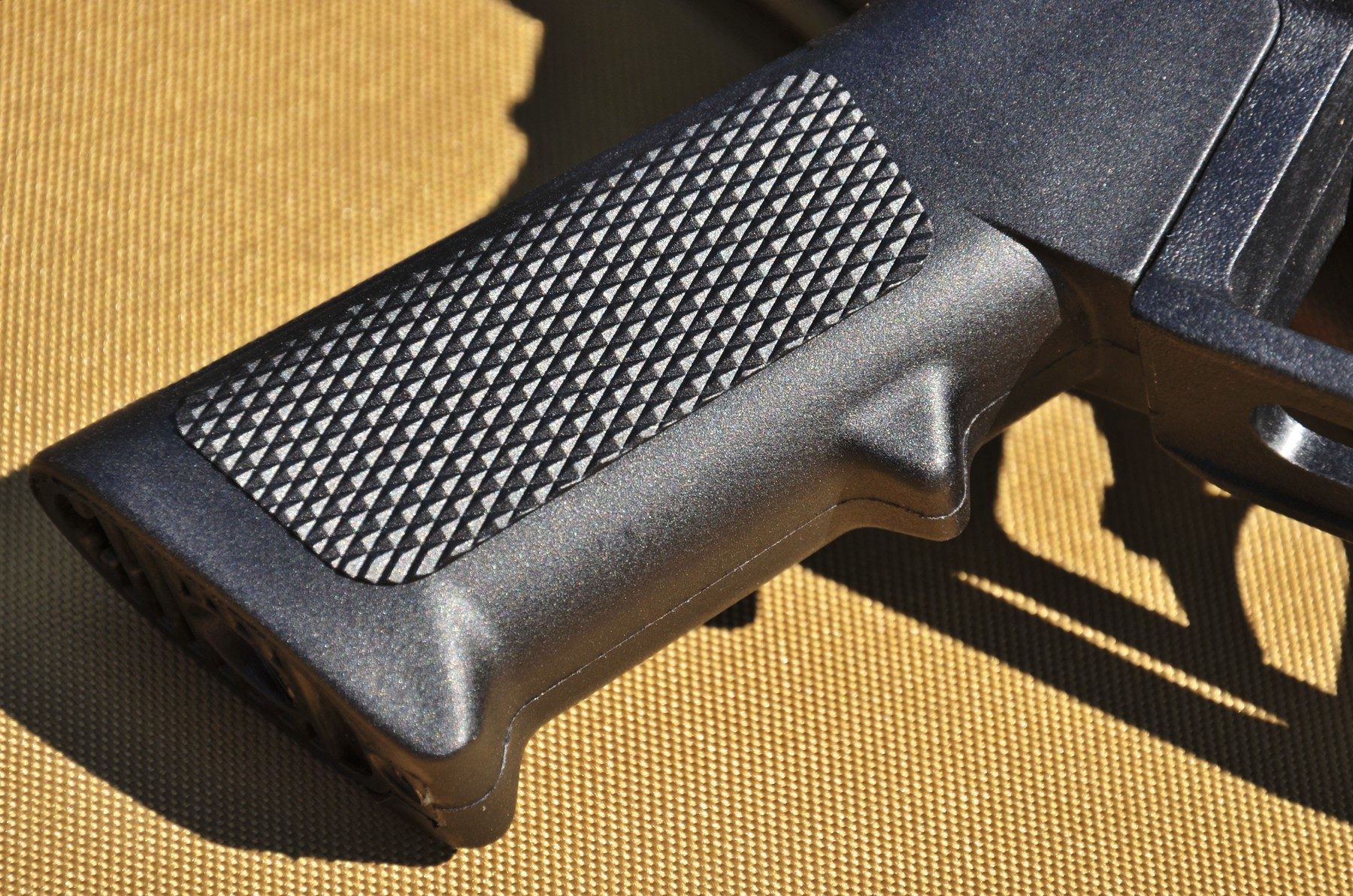
Detail of the moulded grip.
Mounting a scope is simple, thanks to the chunky new breech block and its integrated Picatinny rail. Charging is equally civilised: a filtered Foster valve is recessed neatly into the underside of the forend. No filling adaptor is supplied, on the reasonable assumption that most shooters already have a Foster fitting in the kit box. Pull off the friction-fit cap around the manometer underneath, snap the air supply on, fill to BSA’s magic 232 bar, bleed and remove. The valve is accessible enough, though I found an extended Foster coupler made it easier by giving more leverage.
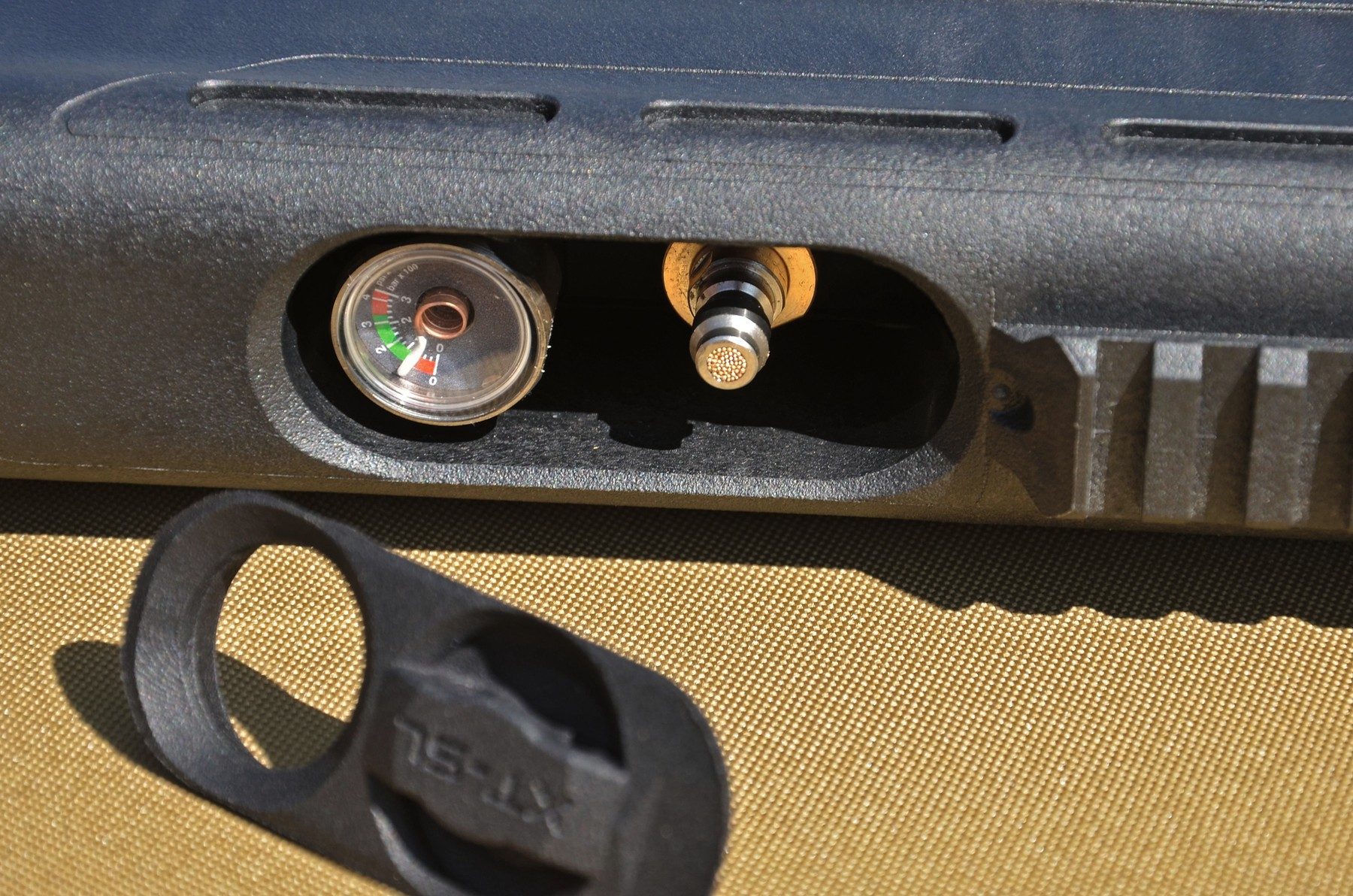
Pull off the neat cover to access the filtered valve.
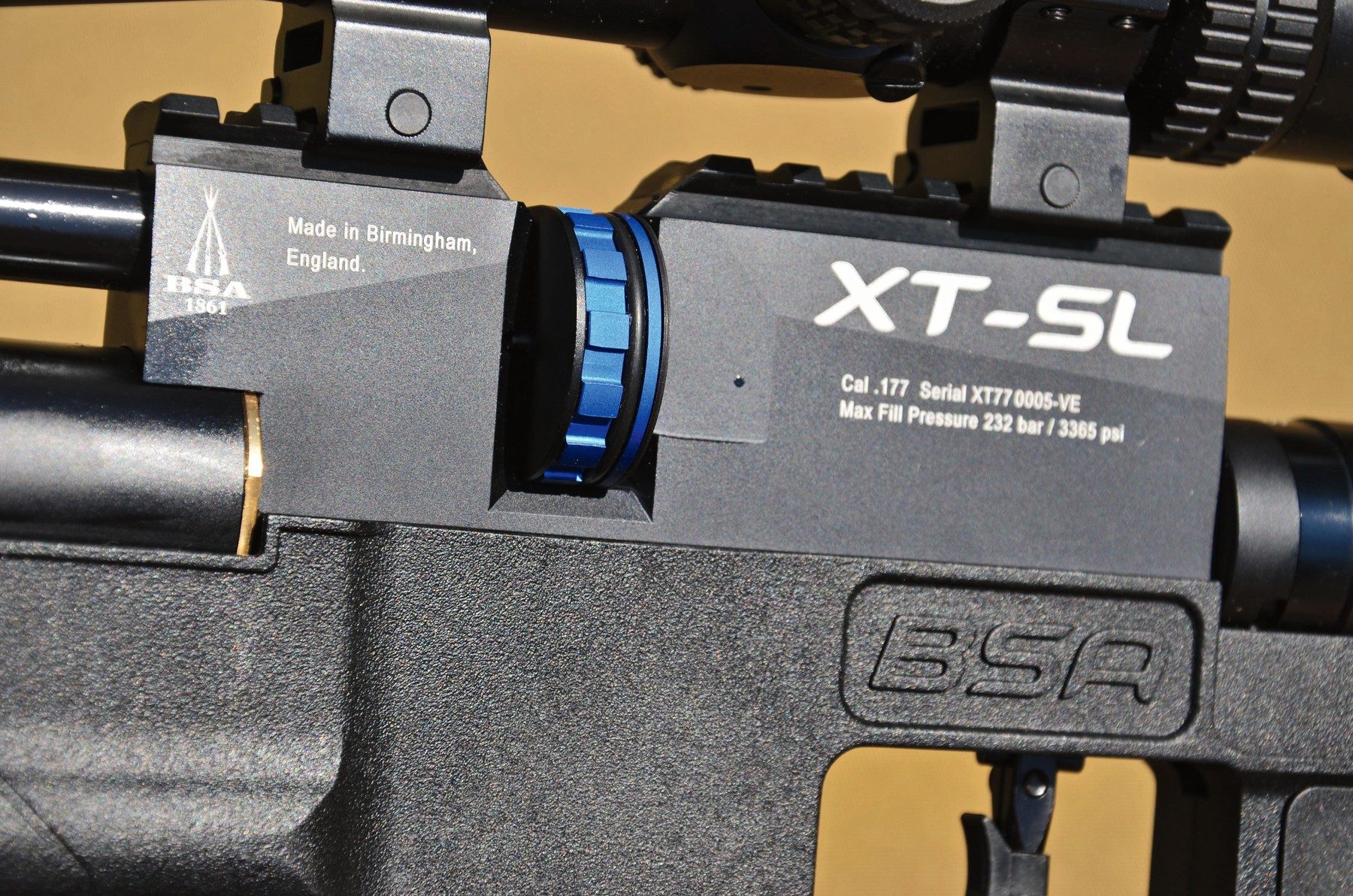
Detail of the quality block and magazine installed.
The magazine needs no pre-wind, which makes filling it straightforward: push a pellet home into each aperture in turn until it is full. It holds 12 in .177 and .22, and 10 in .25. If that is not enough, BSA offers a 20-shot version that ups the firepower considerably.
Shouldered, the XT-SL simply feels right. From the contoured grip to the gentle swell of the forend, the balance is spot on. The sidelever is a pleasure to work, perfectly weighted, and the rotating end piece is a real piece of attention to detail; it is surprising how much difference that small movement under the finger makes. Pull the lever back, snap the magazine in from the left, push the lever home.
Double loading is still technically possible, as it is on many PCPs, but in my hands it only happened when I deliberately gave the sidelever a soft pull to see whether it would. In normal use it never did. In fact the whole thing works so well that I would call it one of the smoothest cycling multi-shot systems I have used.
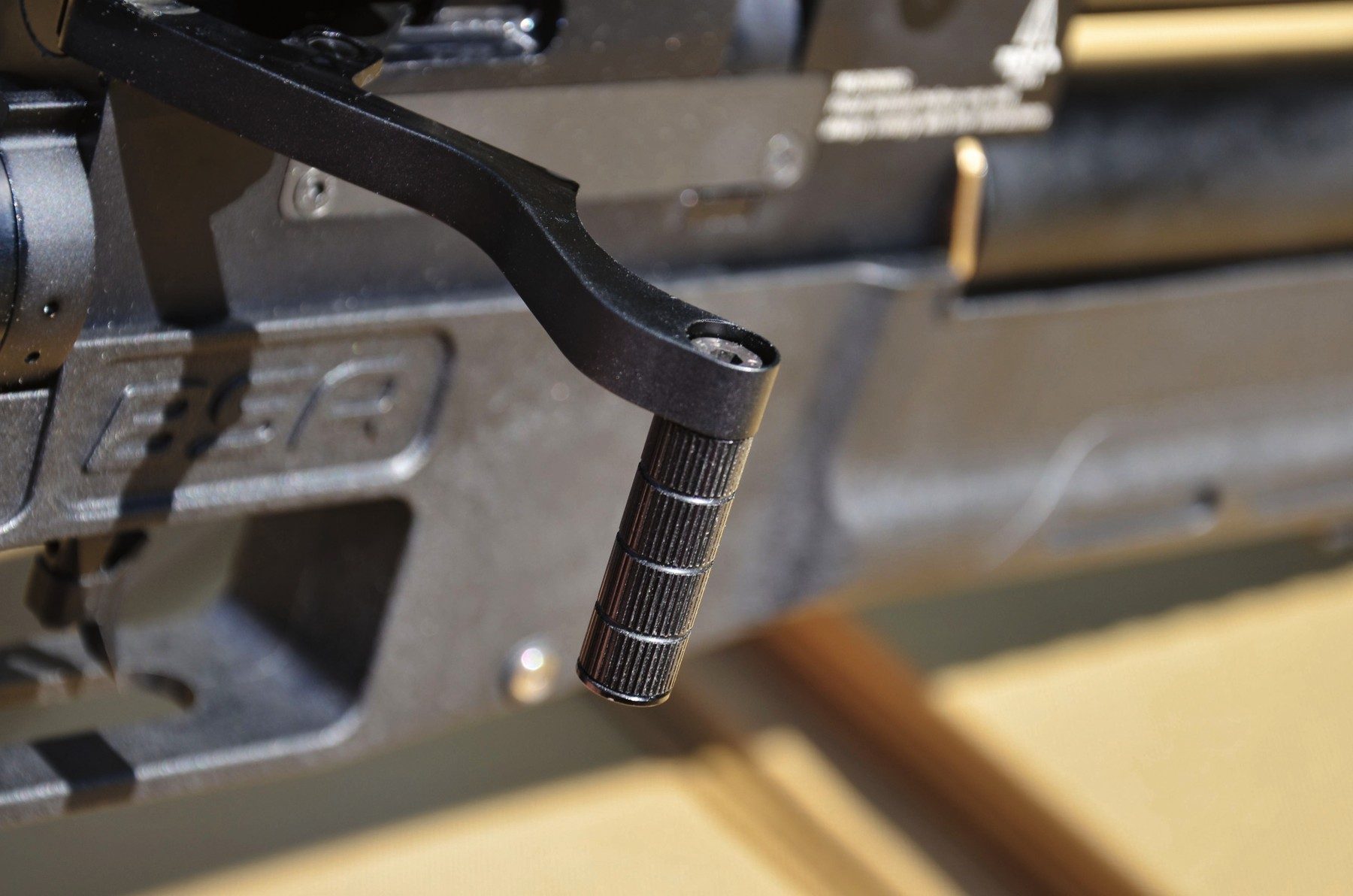
Subtle detail comes with the free-moving lever end piece.
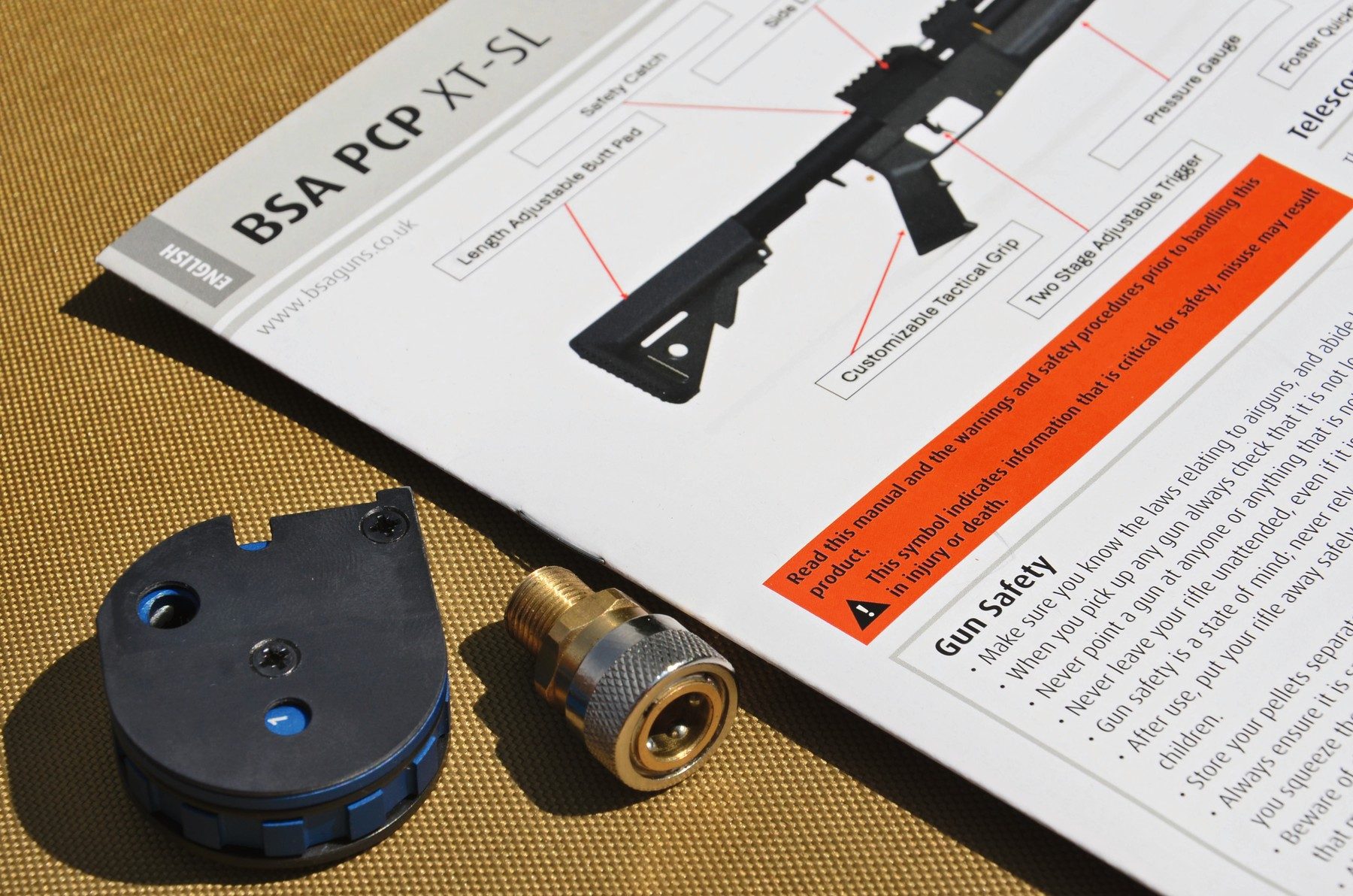
The XT-SL comes with one magazine, but the filling adaptor (shown) is not included.
Magazines, including the oversized 20-shot version supplied for the test, snap into the breech block with the same air of refinement as everything else. One 12-shot magazine stows in the recess on the underside of the chassis. Add the optional magazine stick and you can carry two 12-shot magazines, or a 12 and a 20, on the rifle. It is remarkable how much the profile changes with the stick fitted, but the AK47-ish result is not for me, however practical and well made it is.
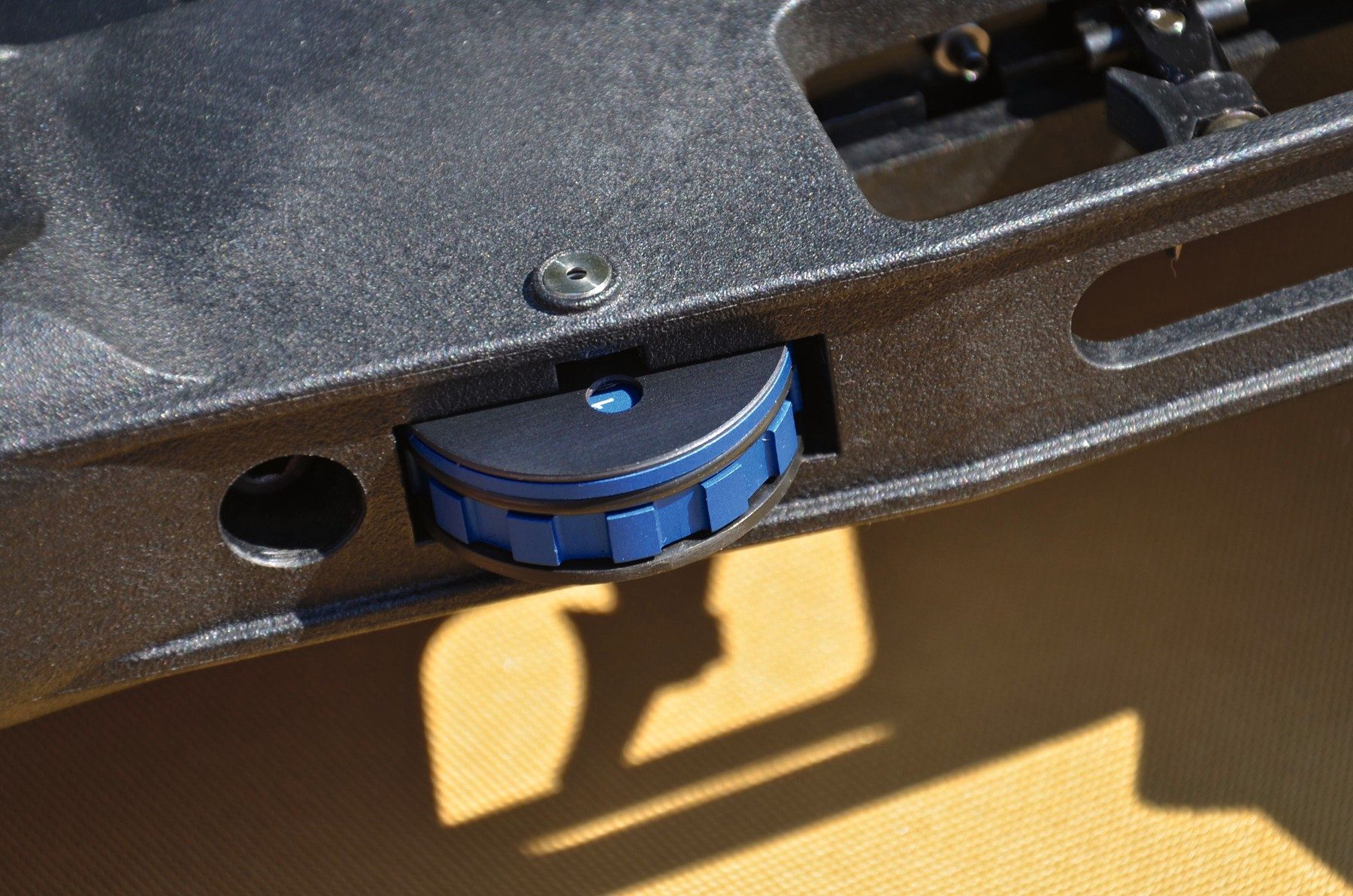
One magazine can be stored in the recess underneath.
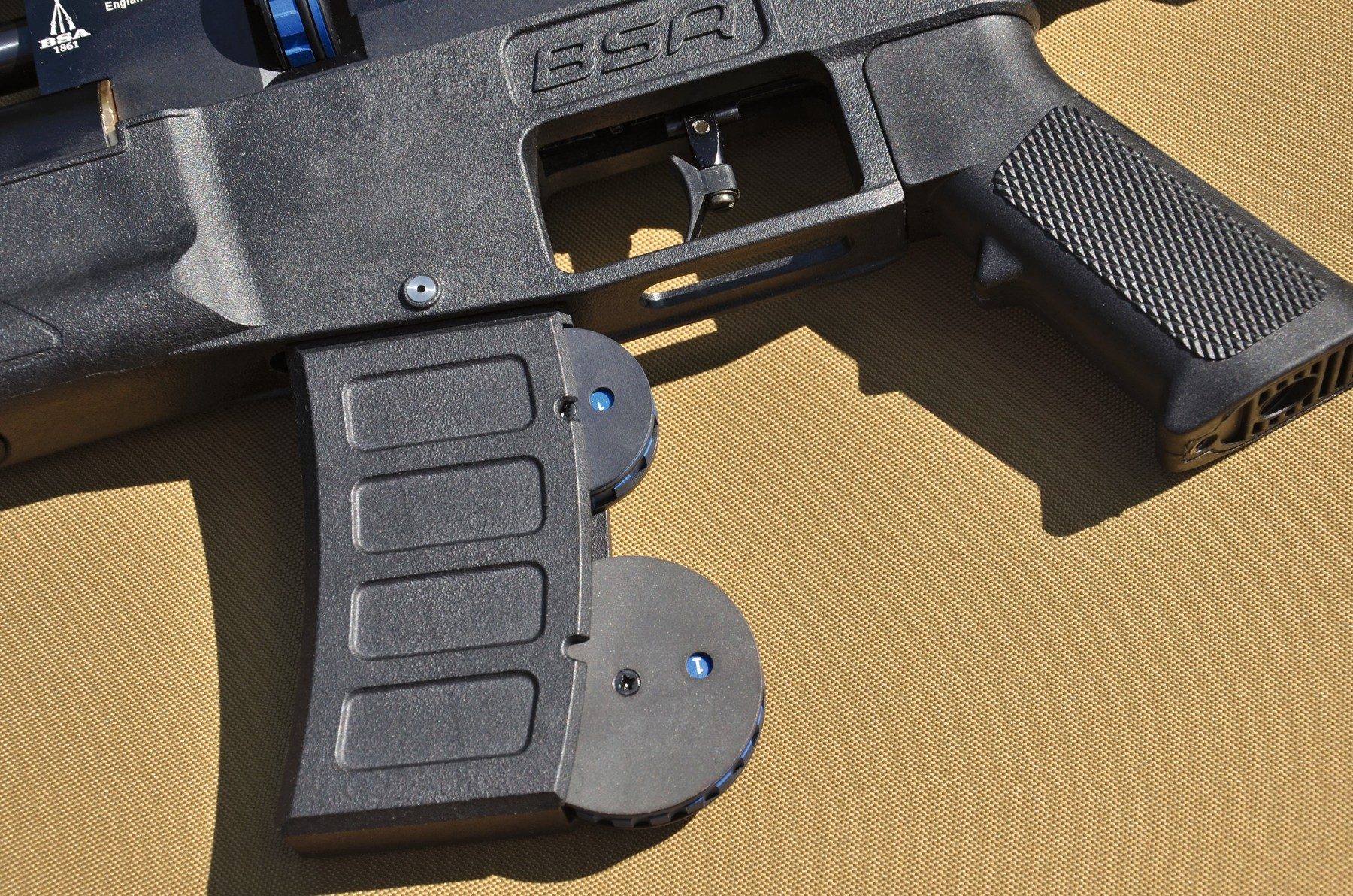
That controversial optional magazine stick will divide opinion.
The regulator is a new design, and my conversations with Simon Moore at the factory included the observation that BSA’s published shot counts are probably conservative. The chronograph agreed. My .177 gave 192 shots before I called a halt at a residual 100 bar, against a claim of 160. Total spread over the full charge was 23fps, and discounting one low figure from the last magazine brings that down to 18fps. That is excellent by any standard, and evidence the new regulator is earning its keep.
The barrel is BSA’s own cold-hammer-forged item, and I was told the rifle had been set up on BSA Blackstar in .177. At 30 yards both Blackstar and Goldstar gave enlarged ragged holes; at 40 yards the Goldstar had the edge, with groups a fraction over 0.25in centre to centre. Excellent stuff.
BSA triggers are usually good and this one is no exception. It is much the same semi-match unit, developed on from the R12, and it works. My rifle arrived with a long first stage but such a sweet release that I left it alone. One adjustment screw can be reached from underneath, but doing the job properly still means taking the stock off, which remains an irritation across the BSA range.
So BSA has a fully fledged tactical model at last, and it is rather appealing. The magazine stick aside, I like the handling a great deal and the technical figures cannot be argued with. With release set for late July or early August, it should be on dealers’ racks by the time you read this.
It is a hunter’s rifle first, which is exactly what BSA set out to build, and it will suit anyone who wants a tactical layout without sacrificing shot count or barrel quality. If tactical air rifles are your thing, this one belongs on the shortlist, and the five-year guarantee is worth having on top.
£999, which includes the 12-shot magazine and BSA’s sound moderator. The aluminium Picatinny forend rail, the magazine holder and the 20-shot magazine are extras. Prices are RRP at the time of publication and may since have changed.
The factory claim is 160 in .177 and 215 in .22 or .25. On test the .177 managed 192 from a 232 bar fill, stopping at a residual 100 bar, so the published figure looks conservative.
All three: .177, .22 and .25. Magazines hold 12 in the two smaller calibres and 10 in .25, and a 20-shot version is available as an extra.
No, and it was left out on purpose to hold the price down, on the basis that owners can customise later. The buffer tube layout does at least mean the entire rear end can be swapped for a compatible butt stock.
A hunting rifle, by design. The matt finish, the included moderator and the shot count all point the same way. That said, the accuracy and the trigger are good enough that it would not look out of place on a club range.
BSA R12 CLX Pro Cayenne Edition – the BSA whose trigger unit the XT-SL’s is evolved from.
Kral Arms Puncher Shadow review: a regulated tactical PCP – the obvious rival layout, on test.
BRK Brocock Ranger XR2 Tactical review – another British tactical PCP with a bottle up front.
BSA Ultra CLX Walnut review – the traditional end of the same range.
QYS .22 domed pellets tested – pellet choice, if you shoot the .22 version.