Gun Reviews >
 Find a Dealer >
 Find a Club >
 Competitions >
 videos >
 Reader Survey >
Bergara Premier CIMA Pro review
- Last updated: 17/07/2026



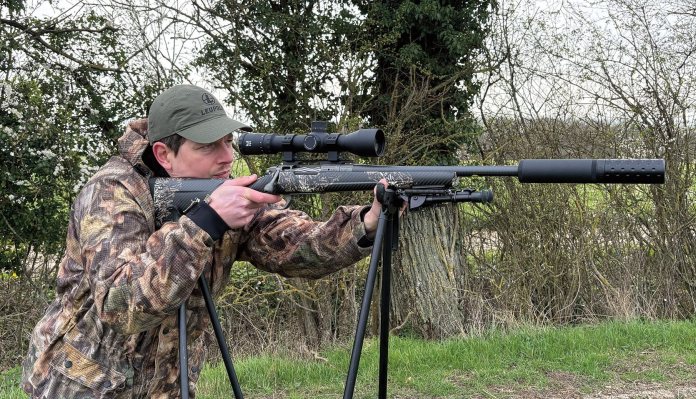
The carbon-barrelled Bergara Premier CIMA Pro promises a full-power stalking rifle at just 2.6kg. We ran it over the chronograph and took it out after muntjac to see whether a rifle this light can still shoot inside its sub-MOA guarantee.
Bergara has built its name on factory rifles that shoot like customs, and the centrefire range now runs from around £805 to the far side of £3,900. The Premier CIMA Pro sits near the top of that spread. I first got my hands on one at the 2026 Great British Shooting Show, on the Edgar Brothers stand, where the exposed carbon fibre and splatter-finished stock stopped me in my tracks.
What grabs you is the weight, or rather how little of it there is: 2.6kg/5.6lb before a scope goes anywhere near it. The question I wanted answered was whether all that weight-saving still left a rifle that could hold its sub-MOA promise with ordinary hunting loads, so it went over the chronograph and onto the target before I took it out after muntjac. Prices here are RRP at the time of writing and may since have moved on.
Lift the CIMA Pro and the lack of weight lands before anything else, yet nothing about it feels as though corners were cut to get there. The only marks I could find were cosmetic, most likely from its spell on the show stand, which told me the barrel had seen very few rounds before mine. Machining, finish and assembly are all a cut above, and the rifle reads as a carefully engineered piece rather than a diet exercise.
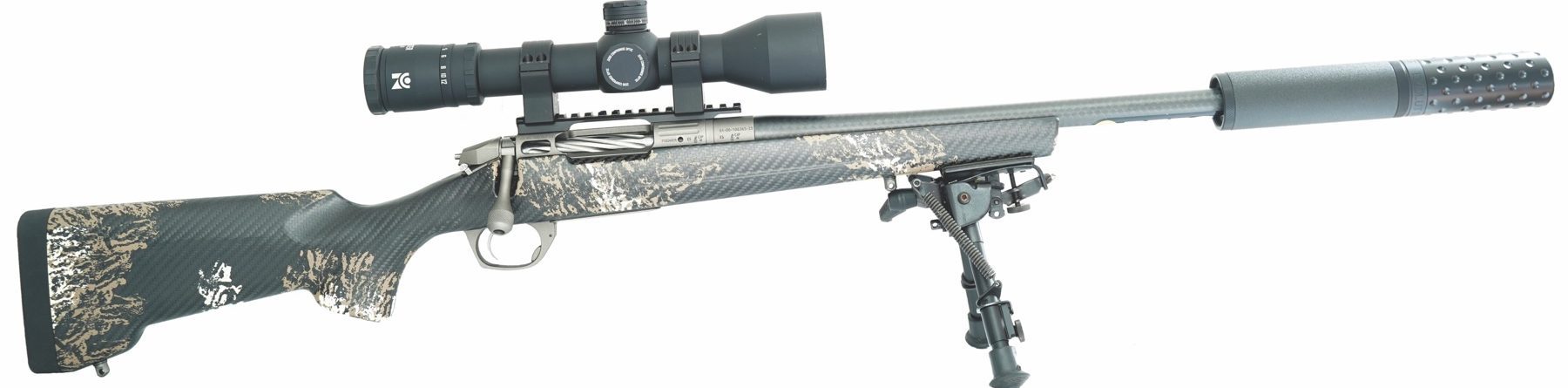
The CIMA Pro on test, fitted with a sound moderator and a Harris bipod.
The tube is one of Bergara’s CURE carbon-fibre barrels, which run stainless-steel strands through the carbon to draw heat out of the barrel. Bergara calls it Cold Bore Technology, and the point of it is to rein in the shift in point of impact that carbon barrels can show as they warm. For all its lightness the barrel is a fairly heavy, straight profile, 20in long and 21mm at the muzzle, free-floated all the way back to the reinforce and cut with a 1:10in twist in this .308. It ships with a muzzle brake on a 5/8-24 UNEF thread, though most stalkers here will swap that for a moderator; my 440g Wildcat Evolution barely shifted the balance.
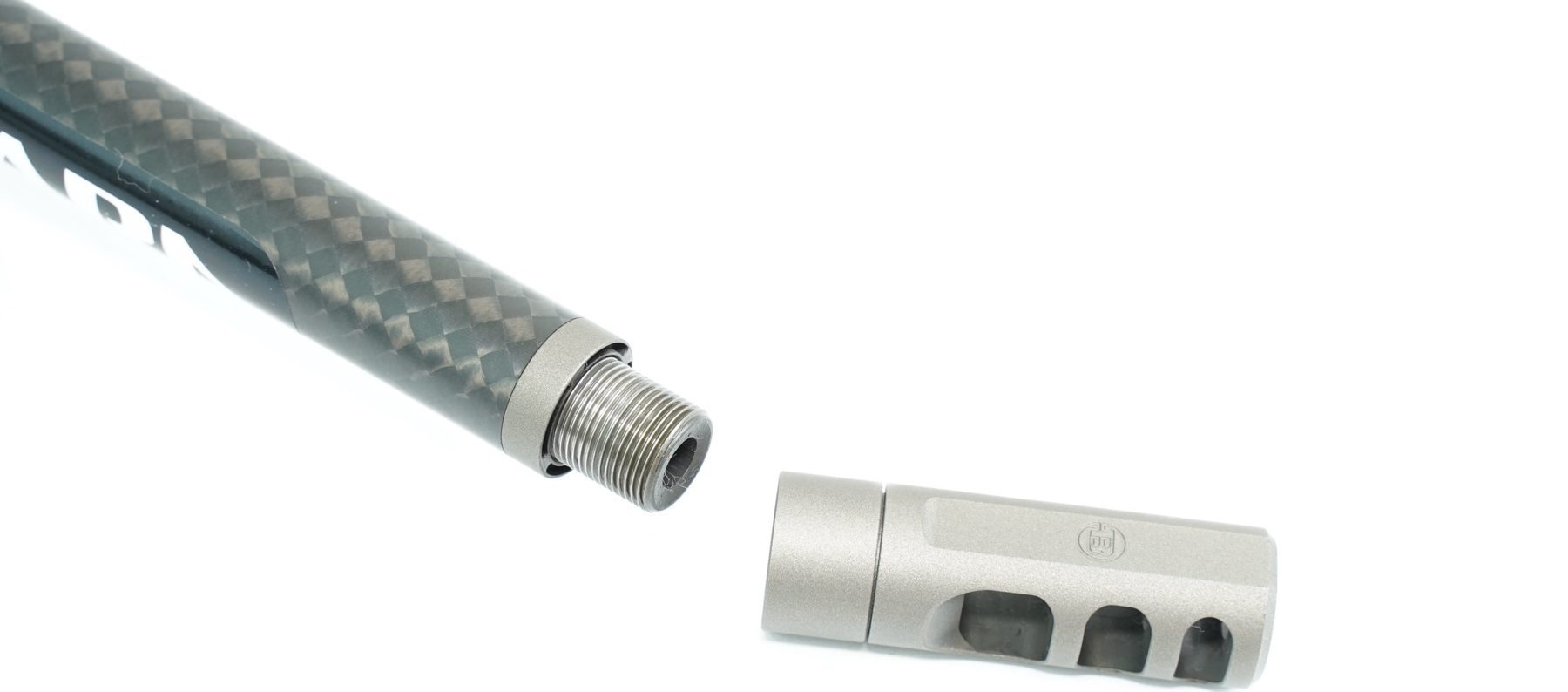
You get a muzzle brake with the rifle, but I fitted a sound moderator to the 5/8-24 UNEF thread.
At the centre of the rifle is Bergara’s Premier Gen II action, a 416 stainless receiver finished in a titanium-coloured Cerakote over every steel part. Weight has plainly been the priority: the action is skeletonised and the ejection port opened right up to 72mm. The receiver takes Remington 700-pattern bases or a Picatinny rail, fitted to the test rifle, and is relieved around the port to make top-loading easier. The bolt is a highlight, spiral-fluted with a 60mm handle and a knurled knob, and rather than a plain two-lug head it runs a floating bolt head for full lug contact. You get a 90-degree lift, twin ejectors and a beefy extractor, and the action shuts with a reassuring solidity.
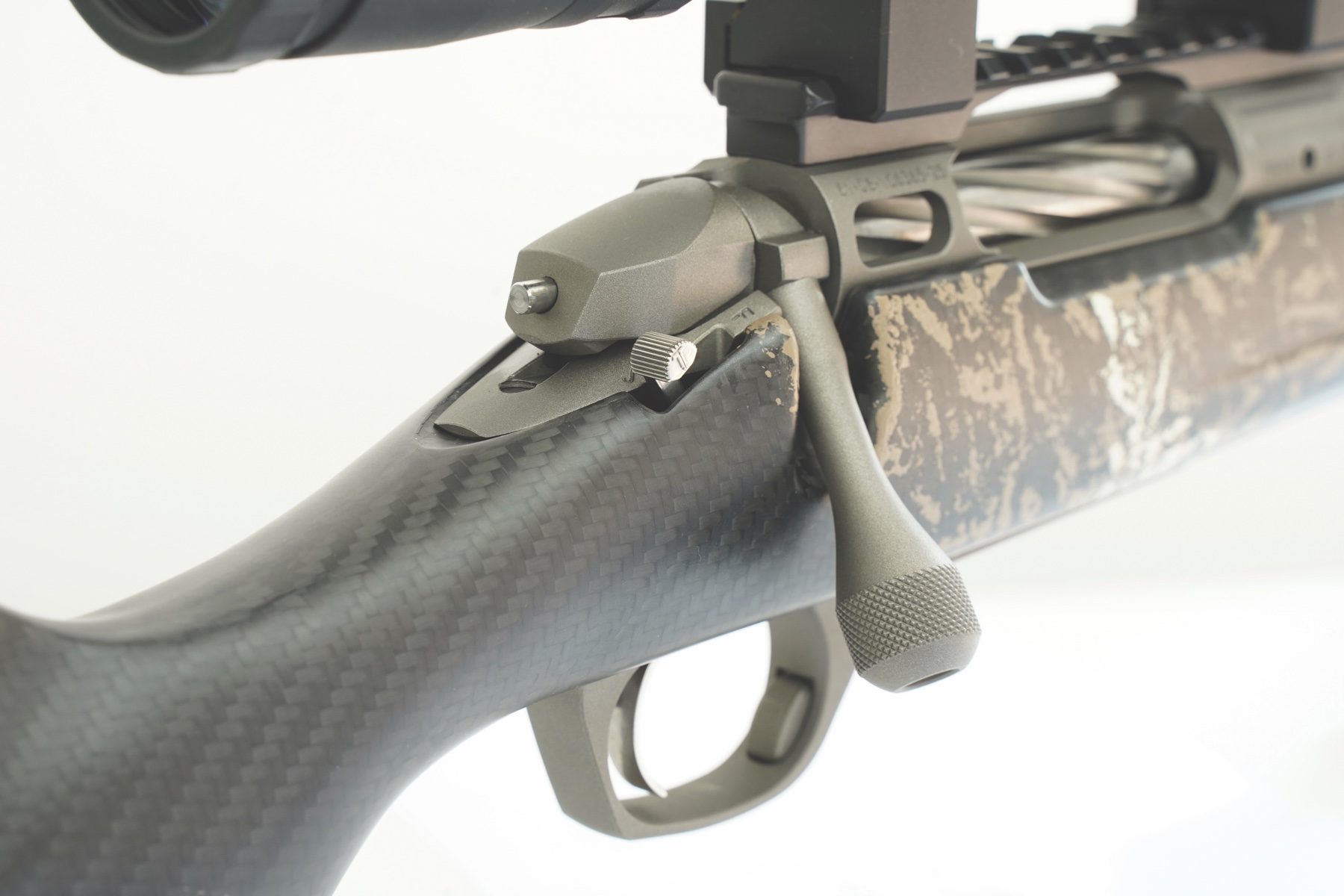 Detail of the knurled bolt knob, two-position safety catch and cocked-action indicator.
|
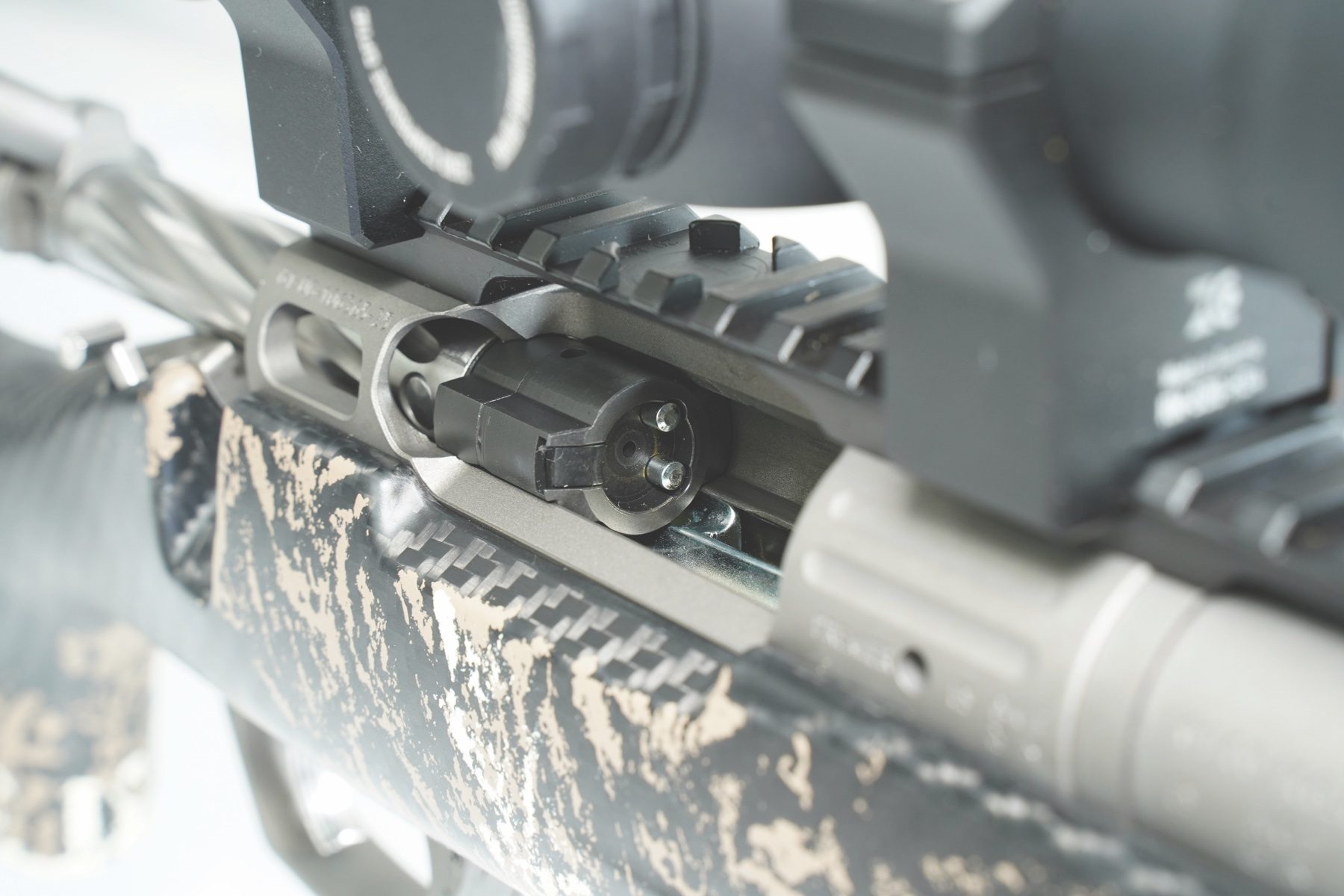 The floating bolt head, twin plunger ejectors and large extractor.
|
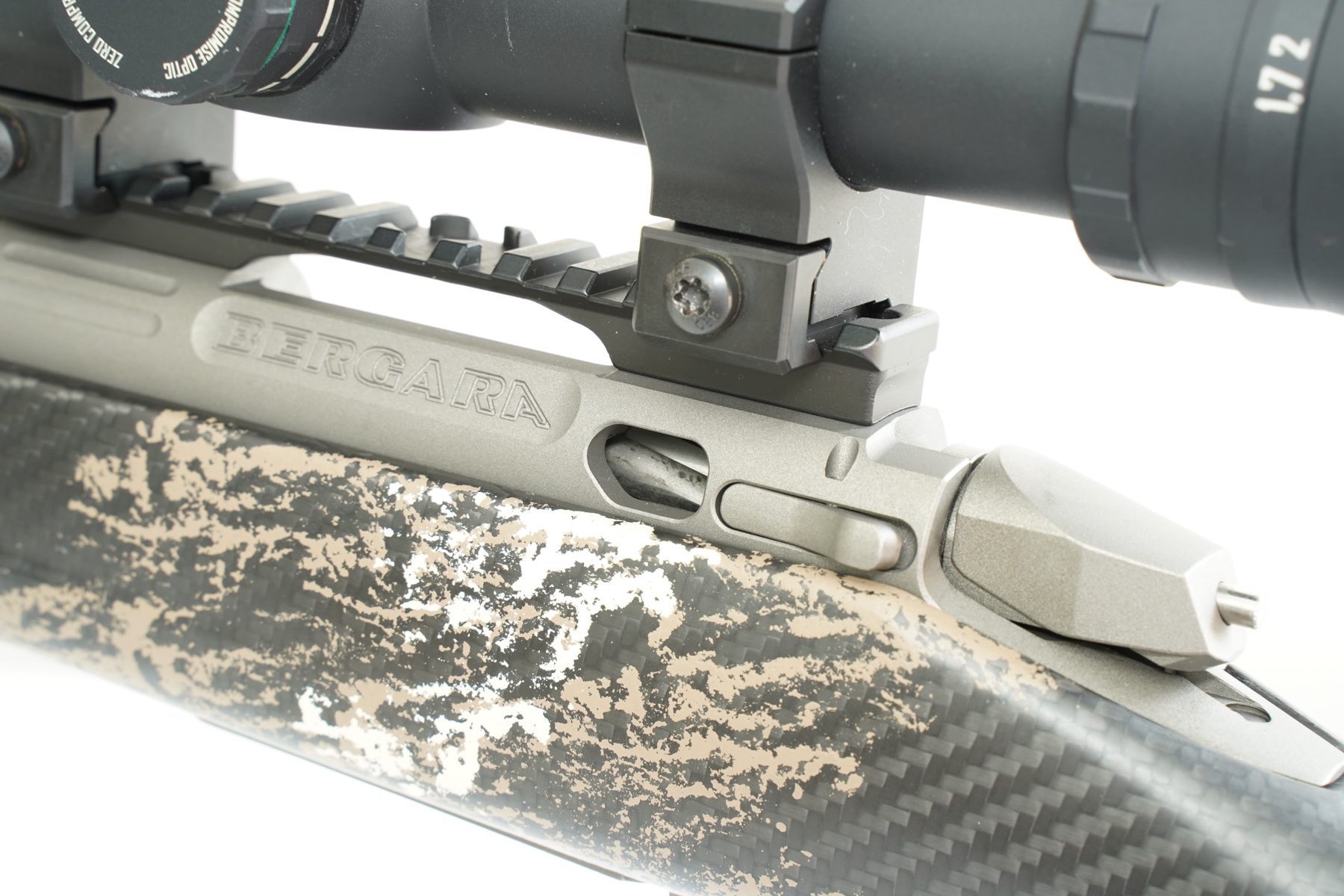 There is generous space around the ejection port for top loading; note the cut-out for weight reduction.
|
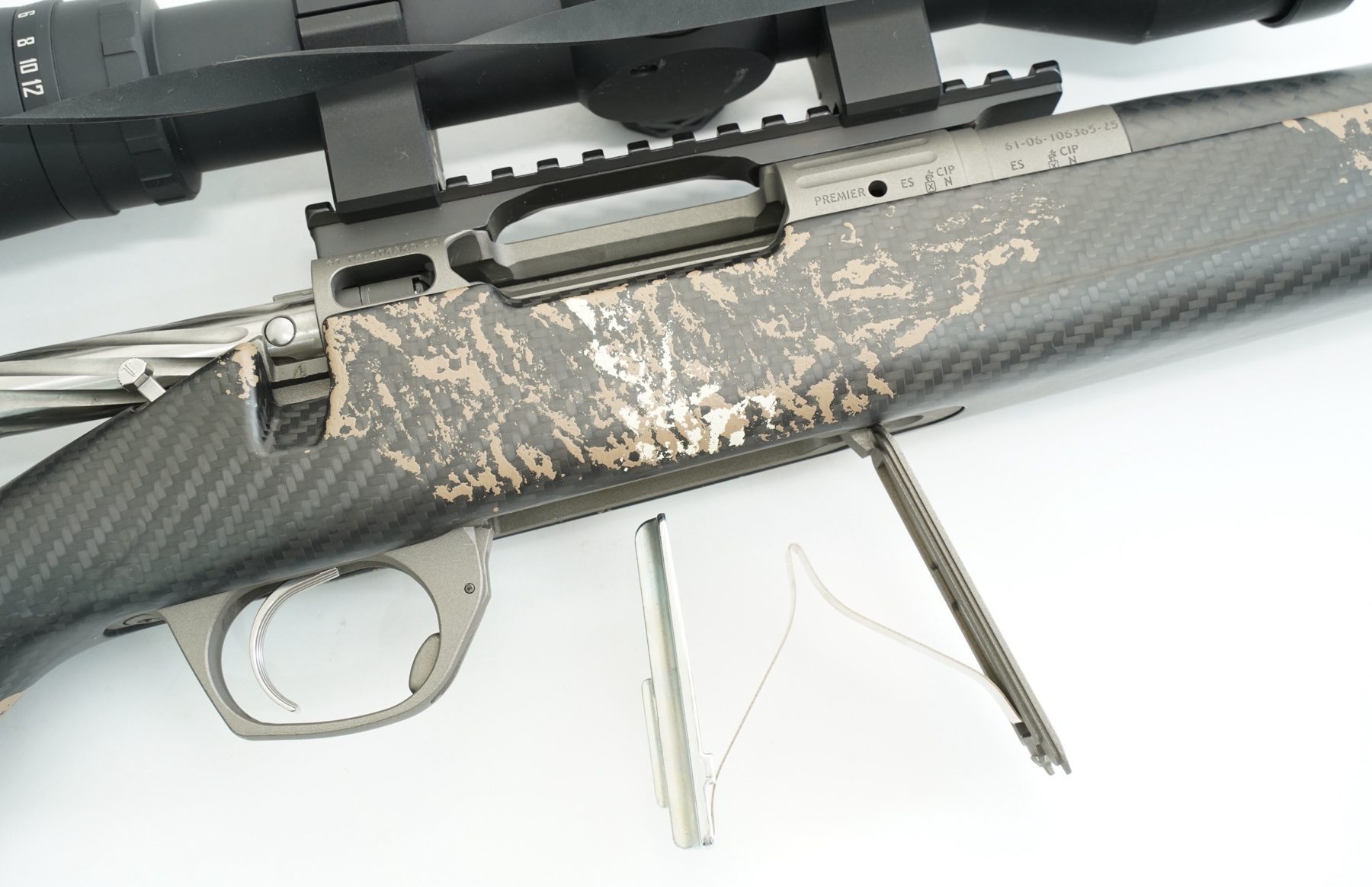 Feed is from a hinged floorplate, so there is no detachable magazine to lose.
|
Hanging a TriggerTech unit off the back of this action is one of Bergara’s better decisions. I have run one on my own rifle for years, and the single-stage trigger here did not let the name down, breaking cleanly at 3lb 15oz and adjustable from 1.5 to 4lb with an Allen key. The two-position safety pushes forward to fire and back to safe while still letting the bolt cycle, with a bolt-release tab on the left and a tactile cocked-action indicator on the shroud. To save weight, feed comes from a hinged floorplate rather than a detachable magazine, holding five rounds in .308, the release tucked into a generous metal trigger-guard.
The stock is an autoclave carbon-fibre moulding in a tan-and-cream spiderweb splatter, and it does a lot to set the rifle’s character. Autoclave curing, borrowed from aerospace and motorsport, gives a very high fibre-to-resin ratio, so the stock is both very light and impressively stiff, shrugging off knocks and temperature swings that would have lesser lightweight stocks flexing or ringing. The forend runs to 15in with twin sling studs and a subtle finger groove each side, and there is no chequering or stippling. The grip is a traditional, non-vertical shape that falls easily to the trigger. My reservations are about fit rather than build: a 13.5in length of pull that is on the short side for a taller shooter, and a comb that sits low under a modern scope.
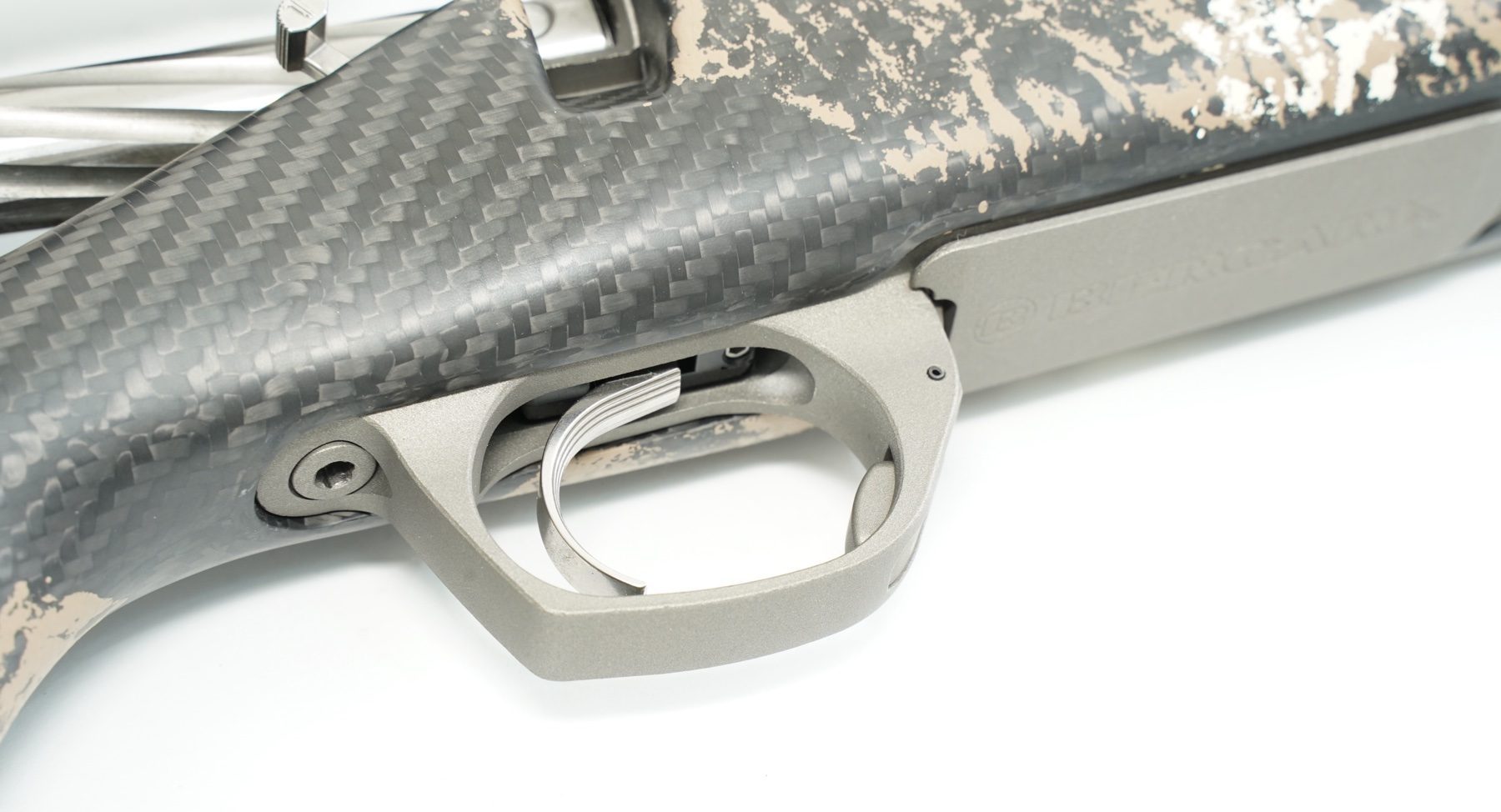 The single-stage TriggerTech trigger broke at 3lb 15oz on test.
|
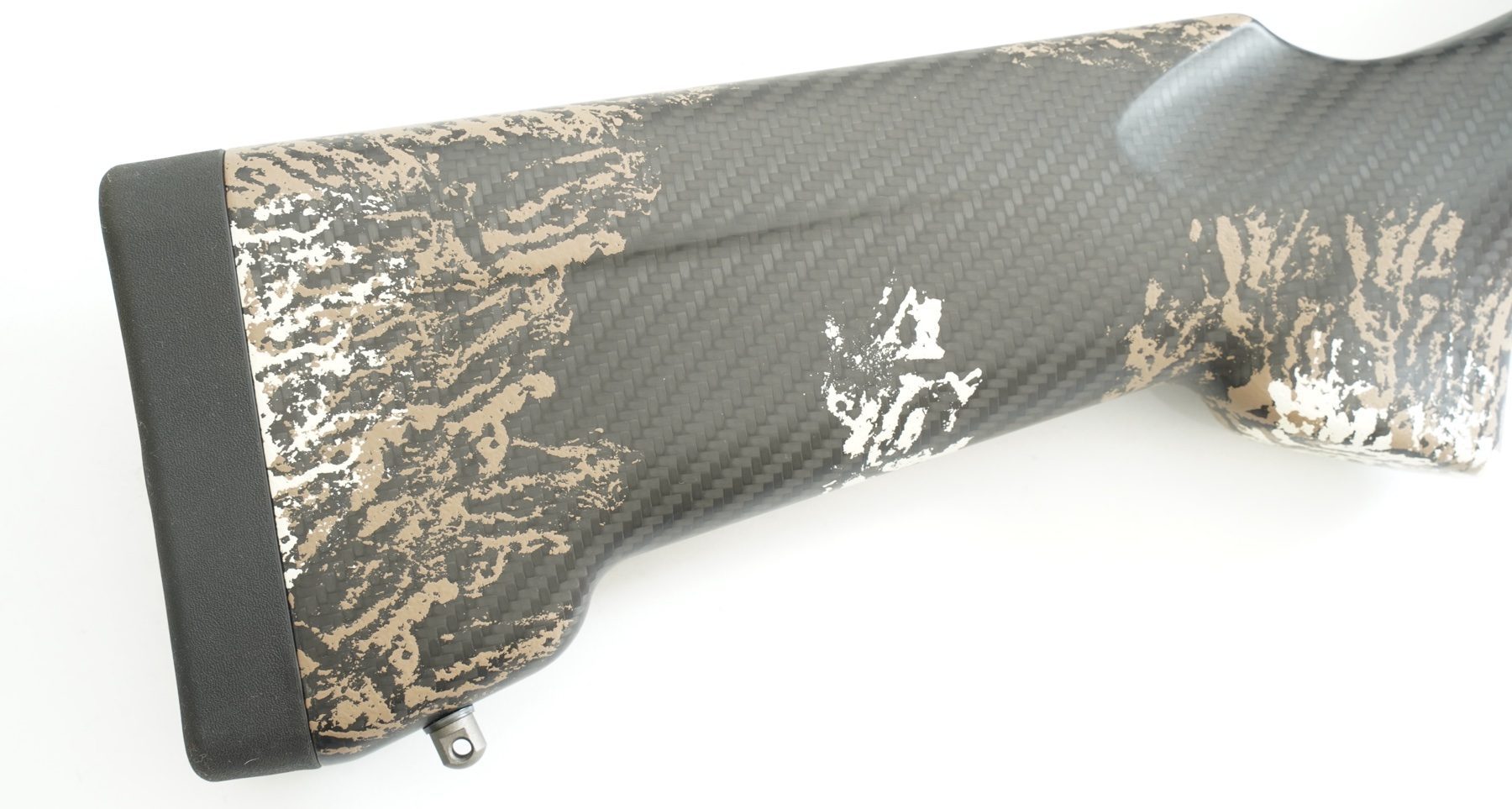 The autoclave carbon-fibre stock carries a tan-and-cream spiderweb splatter finish.
|
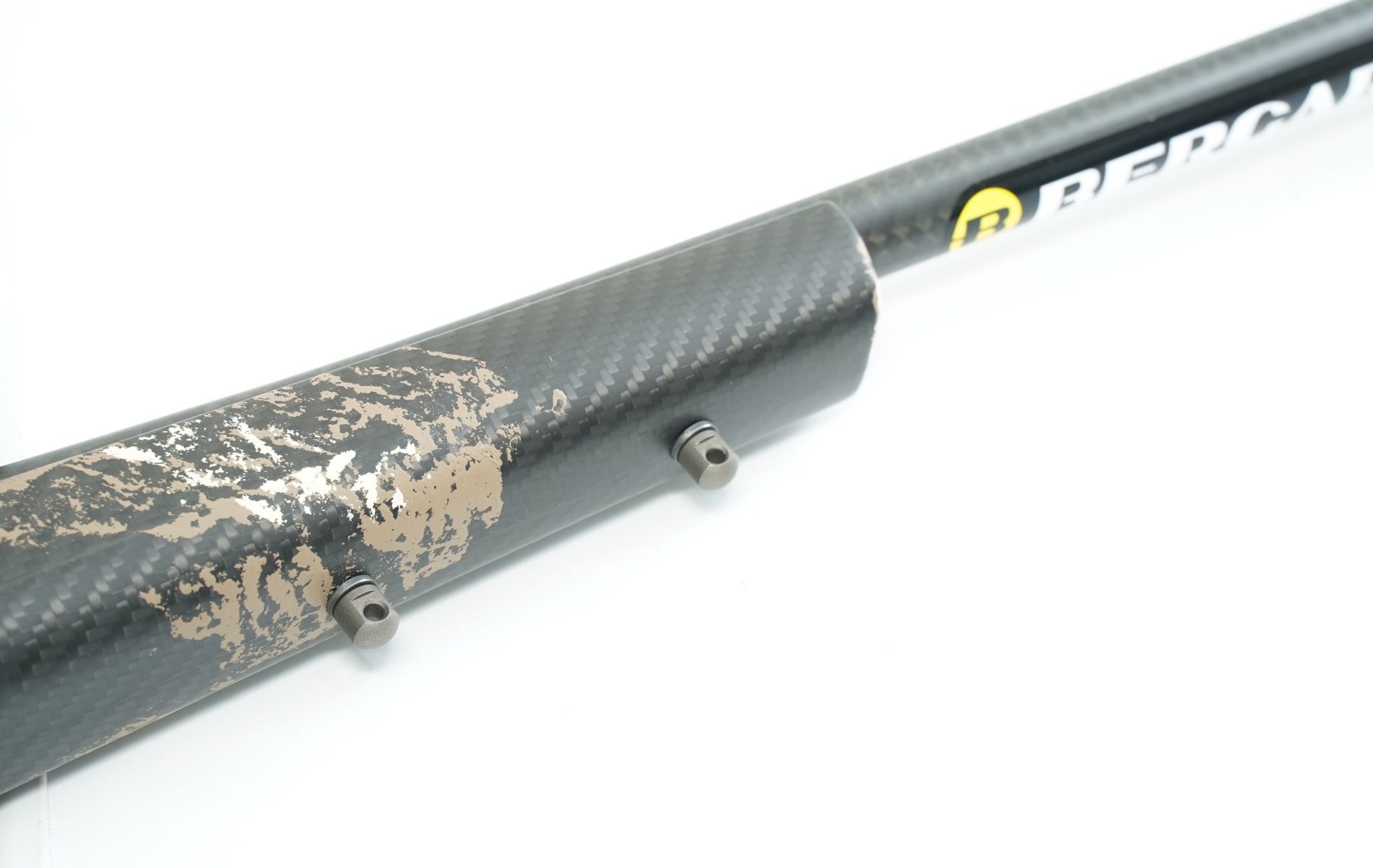 The 15in forend gives plenty of room for shooting sticks and your supporting hand.
|
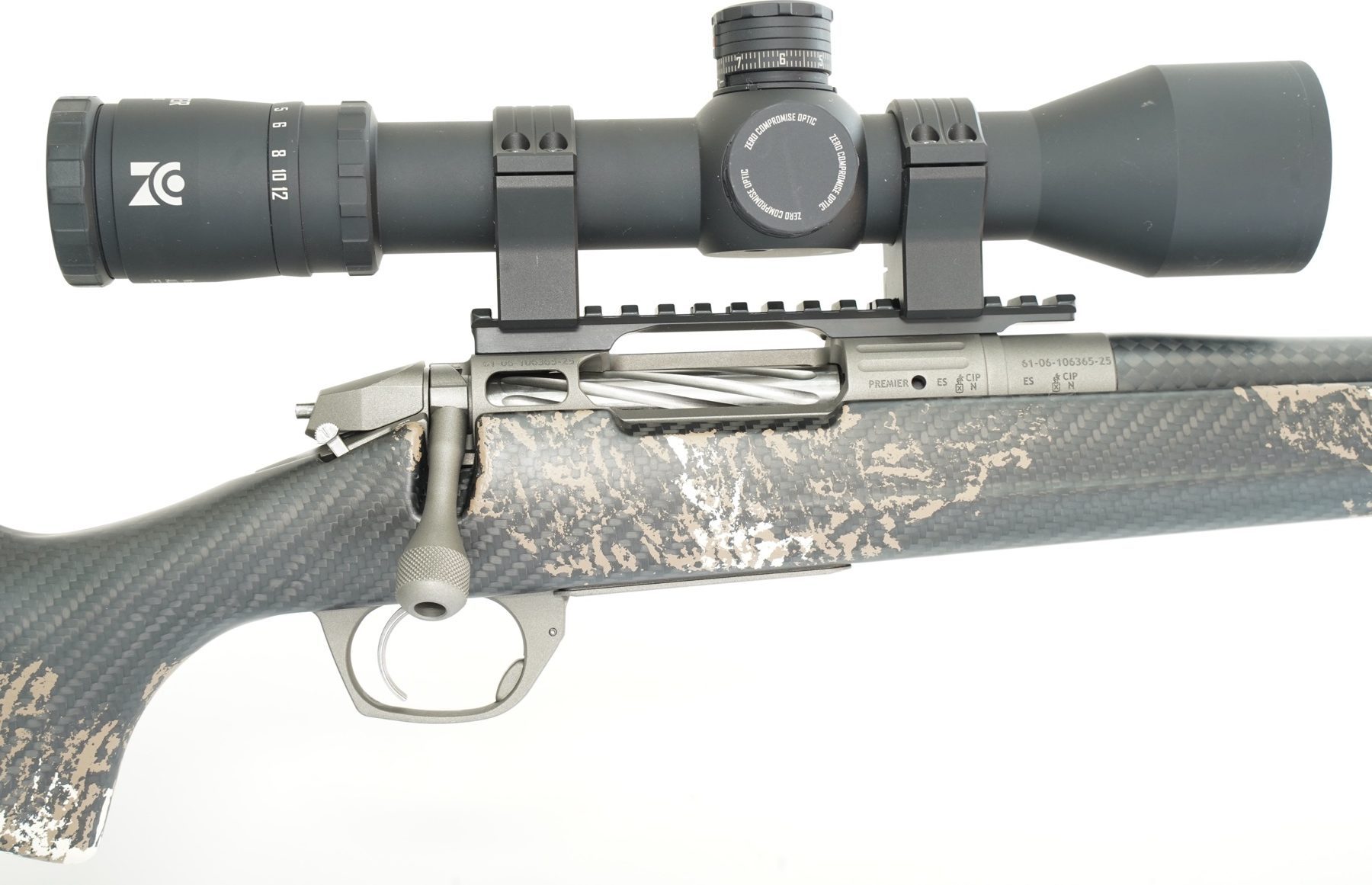 The review rifle wore a ZCO ZC Hunter 1.7-12x50 riflescope.
|
Light rifles usually make the shooter pay, because less mass means more felt recoil, so the real test was whether the Pro could keep its sub-MOA promise with hunting rather than match ammunition. Wearing a ZCO ZC Hunter 1.7-12x50 and fed a spread of Hornady non-toxic loads, it opened with the 125-gr ECX and impressed straight away: two back-to-back three-shot groups under 0.448in at 100m, with 3,000fps and 2,507ft/lb showing on the chronograph. Step up to the 150-gr ECX and 165-gr CX and both the groups and the recoil grew, to 1.2in (1 MOA) and 1.9in (1.675 MOA), so two of the three loads made the grade and one slipped outside it. Wary that carbon barrels can wander as they cool, I rechecked zero with the 125-gr load before stalking, and the CURE barrel stayed put as the rifle accounted for two bucks.
What we liked
What we did not
The CIMA Pro is a thoroughly likeable rifle, accurate with the load it prefers and beautifully quick in the hand, and across handling, accuracy, trigger, stock and value it comes out at a solid 84/100. My one real reservation is calibre: .308 works, but it is not where this rifle is happiest, because the heavier bullets sharpen the recoil and widen the groups. In a rifle built around low weight, the softer 6.5 Creedmoor looks the more sensible pick, and would let more shooters get the best from it. As a lightweight, though, it is hard to fault beyond the price.
Three things together: a CURE carbon-fibre barrel with heat-conducting steel strands, a skeletonised 416 stainless Premier Gen II action, and an autoclave carbon-fibre stock. Between them they bring the rifle to 2.6kg/5.6lb without a scope.
In our testing, yes. Bergara’s Cold Bore Technology is built to limit the shift in point of impact as the barrel heats and cools, and after letting it cool we rechecked zero with the 125-gr load before stalking and found it unchanged.
With Hornady 125-gr ECX it put two three-shot groups under 0.448in at 100m. Heavier .308 bullets opened up to 1.2in and 1.9in, so the lighter load was clearly its favourite.
RRP was £2,980 at the time of testing, with UK distribution through Edgar Brothers. It comes in nine calibres from .223 Rem up to 7mm PRC. Prices are RRP and may since have changed.
Bergara B14 Wilderness Thumbhole Carbon – Perfect or Pretty?
Savage’s 110 Carbon Tactical FDE