 Gun Reviews >
 Find a Dealer >
 Find a Club >
 Competitions >
 videos >
 Reader Survey >
Reloading: Sizing up Recoil
- By Pete Moore
- Last updated: 16/12/2016



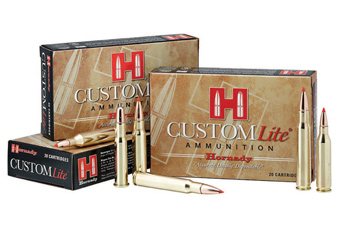
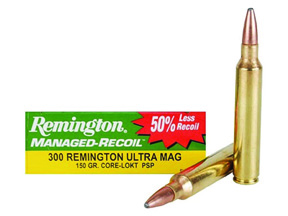
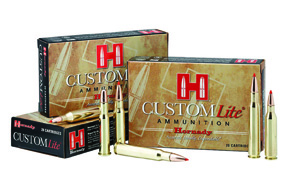
Last month we briefly touched on the subject of reduced loads as a means of saving some hard-earned dosh. Well, load reduction can do much more than that, it can save your shoulder, extend the barrel life and speed up your sight acquisition… all in the name of reduced recoil. It is only in the last few of years that cartridge manufacturers such as Hornady, Remington and Federal have paid serious attention to this issue. Hornady now have their ‘Custom Lite’ series, Remington their ‘Managed Recoil’ and Federal cut to the chase with their ‘Low Recoil’ brand. They all offer a claimed 25 - 50% reduction in comparable felt full load recoil!
DEBUNKING THE BIG BANG THEORY
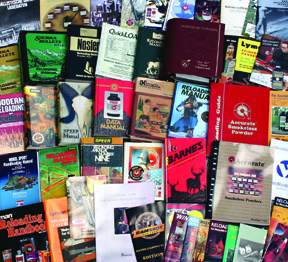
Let’s begin by getting over the ‘hot load = big balls’ attitude to shooting. Over the years I’ve encountered several ‘level case full of powder’ handloaders who insisted that their proof+ load recipe was the only way to go. In truth, most of them couldn’t hit a barn door with a sledge hammer. Yeah, right, small brain, big bang. Shooting, whether target, game, pest control and obviously benchrest is all about placing the pill exactly where you’ve aimed it, and doing it consistently and comfortably. For obvious reasons commercial and military ammunition manufacturers generally build their products to exploit the maximum safe limits of the calibre design, as specified by control authorities such as SAAMI and CIP. Loading manuals explore a safe range of working loads from those which parallel the factory; SAAMI specified upper limits, to those which give around a 10% reduction in MV - their start loads.
CROSSOVER CALIBRE PERFORMANCE
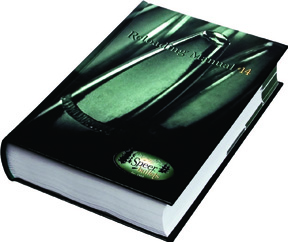
However, there are exceptions to this data spread, especially where compressed loads are involved. Other exceptions take account of the individual pressure/deflagration properties of some propellants, often where lower pressure performance is unpredictable. As an added bonus Speer and some of the other manual publishers offer Lab Notes or Tech Tips with some calibres. A good example being Speer for .30-06 Springfield, indicating that their start load of 42-grains of H4895 duplicates the performance of the .30-30 with the same bullet weight. Indeed, cross data for the multitude of ‘.30-based cartridges’ is the most common. Expanding the concept, it means that such hefty calibres as .30-06 can be safely reconfigured to offer reduced ballistic performance that mimics a lighter cartridge. The benefits can include reduced meat damage and safer use in reduced range applications as well as improved case and barrel life. Some FEO’s recognise this fact and will consider wider applications for your nominated, hand loaded calibres.
DOWNLOADING WITH IMR SR 4795
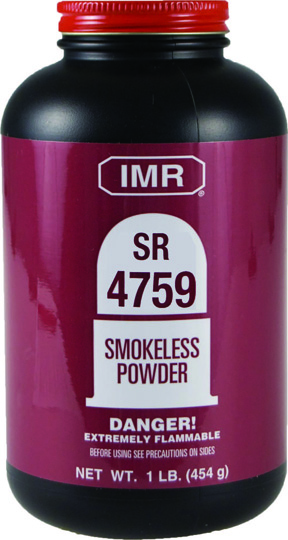
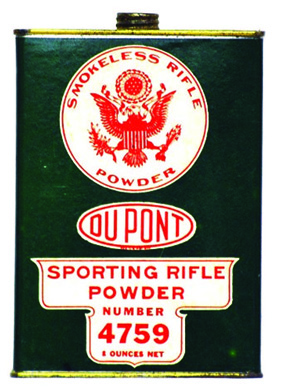
Some bulk propellants have actually been designed to offer reduced recoil, but not necessarily reduced pressure, characteristics. The best known of these, listed at a fast rifle powder, is IMR SR 4759. This is what former makers IMR tell us: “This bulky powder really shines as a reduced load propellant for rifle cartridges. Its large grain size gives good loading density for reduced loads, enhancing velocity uniformity.”
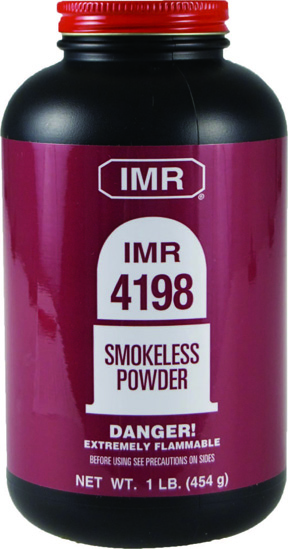
Unfortunately, the makers and some manual publishers only pay scant attention to this powder in their data and new owners Hodgdon have backed away from supporting the claims. The exception within my library is Speer, their manual giving reduced load data based upon IMR SR 4759 for calibres ranging from my favourite .22-250 thru’ .220 Swift, .250 Savage, .25-06, .257 Wby Mag, 6.5 x 55 Swed, 6.5 Rem Mag, .270 Win, .270 Wby Mag, 7mm Mauser, .280 Rem, .284 Win, 7mm Rem Mag, .300 Savage, .308 Win, .30-40 Krag, .300 H&H Mag, .308 Norma Mag, .300 Win Mag, .300 Wby Mag, .303 Brit, .338 Win Mag, .340 Wby Mag, .350 Rem Mag, .358 Norma Mag, 9.3 x 74R, .375 H&H Mag to .45-70 Gvt. Speer also feature reduced load data for IMR4198 and XMP544. WARNING, unless higher load data is also quoted for 4759 in your selected calibre, do not be tempted to interpolate increased loads for this powder. Because this is a bulk propellant, the reduced load recipes do not represent a cost saving over other materials and loads.
DIY DOWNLOADING
The most important point to remember is that high density propellants are not really suitable for this application. If your standard ball powder load only fills around 70% of the case then downloading it should be avoided. As the loading density (the percentage of the case that contains propellant) decreases, so the risks of inconsistent and even dangerous performance can increase. As we know, primers are designed to give a particular range of performance. This embraces their ability to penetrate the propellant charge. As that charge volume decreases so the effect of the primer will change!
Instead of the primer jet penetrating the base of a column of propellant and initiating a ‘base up’ deflagration, instead it can initiate the top surface of a flattish heap of powder, or even ignite it from the front… a flash-over. I’ll admit that the science on this subject is not well documented, and that some, or many of the tales of detonation or flash-over may be apocryphal. However, there are enough credible shooter accounts and metallurgical analyses to support the fact that guns can, and do blow up with light loaded cartridges. Supporting the credibility of this is the fact that blow-ups seem to be more common when the propellant is double based. Double based powders contain nitroglycerine, considerably more sensitive to pressure spikes than the plain nitrocellulose of single based examples.
LEAD AND PRESSURE
The other insidious risk to your gun comes from the misapplication of jacketed bullet loading data to lead bullets. Fans of Lyman reloading manuals will already understand the arguments, but they’re worth repeating. Compared to the stiffness of thick wall jacketed bullets, lead flows rather easily. As a result, the base pressures applied by ‘normal’ powder charges will create huge levels of forcement, stripping material into the rifling and generating excessive pressures.
So stick to what the good books tell you and if you have a yen to do something different ask an expert first, that way you will be able to type with all your fingers and hopefully see the screen too..
click on image to enlarge
click on image to enlarge
click on image to enlarge
click on image to enlarge
click on image to enlarge
click on image to enlarge
click on image to enlarge
click on image to enlarge
click on image to enlarge


