 Gun Reviews >
 Find a Dealer >
 Find a Club >
 Competitions >
 videos >
 Reader Survey >
Fiocchi at 150: the rifle and shotgun ammunition, and how it has tested
- Last updated: 03/07/2026



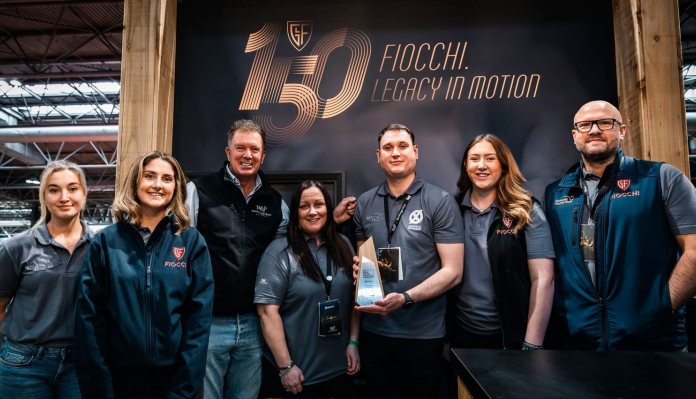
A 150-year-old Italian name with deeper British roots than many shooters realise. Here is what Fiocchi offers across rifle and shotgun – and where to find our hands-on tests of it.
Fiocchi turns 150 this year, and for a company that makes something as unforgiving as ammunition, reaching that age through two world wars, repeated economic turmoil and a pandemic is no small feat. Founded in Lecco, in northern Italy, in 1876, the firm is marking the milestone under a global campaign it calls Legacy in Motion. For the British shooter, though, the anniversary is mostly a prompt to look again at a range that spans both the cartridge bag and the ammunition cupboard – and one that has been quietly available here, and quietly tested in these pages, for years.
What makes the company worth a fresh look is its sheer breadth. Few manufacturers cover the clay ground, the game day, the foxing truck and the stalking high seat from a single catalogue, and fewer still make the components that go into all of it. Over the years we have run Fiocchi cartridges and rounds across that spread, and the picture that emerges is of dependable, sensibly priced ammunition rather than flash – which, for most shooters most of the time, is exactly the point.
Shotgun ammunition is where Fiocchi’s UK reputation was built, and the range is deliberately broad. At the top sit the competition cartridges, the kind of loads associated with wins at the highest level, while budget-friendly options carry the newcomer through their first seasons. Gun Mart has put a fair cross-section across the pattern plates over the years, from the gold-boxed Golden Trap, an unashamedly high-end trap load praised for the regularity of its pattern and its soft recoil, to the keenly priced Top One, now known as TT One, judged a solid all-round sporting cartridge that has sold well around the country. That competition pedigree is no marketing conceit: Fiocchi cartridges have carried shooters to the very top of the sport, Olympic medals included, and the appeal for the club shot is being able to buy into the same name that has stood on the podium. The ladder runs all the way down to the first lesson, which is part of why the brand turns up in so many cartridge bags.
Beyond the clay line, the game shooter is well served, with fibre and plastic wad options across the gauges and down into the smaller bores – the 20, the 28 and the .410 – that have found a fashionable following in recent seasons. It is a range with real depth rather than a handful of headline loads.
It also reaches into the part of the market that now matters most: non-toxic. Fiocchi’s Wetland steel cartridges – 12-gauge loads built for wildfowl but, as our tester noted, perfectly capable as an economical all-round game load – have shown the even patterns the move away from lead will demand. That is no accident, because Fiocchi makes its own propellant powder, and controlling the powder is much of the battle in getting steel and other non-toxic loads to behave.
British shooters should also note how much of this is made on home soil. The UK arm runs a purpose-built shotshell factory in Staffordshire, the legacy of its 2022 acquisition of the long-established British maker Lyalvale Express, and it now carries three brands – Fiocchi, Lyalvale Express and the premium Italian house Baschieri & Pellagri – between them spanning everyday to super-premium. For the buyer that means a price point for every peg. It also means a good slice of what a British shooter fires is made within the UK, with the shorter, steadier supply line that brings – no small thing after several volatile seasons for cartridge availability.
The rifle line has flown under the radar in Britain, and the company is the first to admit it. “We’ve probably not done a good enough job to promote it,” says James Rose, chief executive of Fiocchi UK, in an exclusive interview. Yet the ammunition is on the shelf, and has been for some time, sold simply by calibre rather than under marketing names. The centrefire range runs through the calibres a British shooter actually uses – .222 and .223 Remington for foxes and the smaller deer, then .243 Winchester, 6.5 Creedmoor, 6.5x55 SE, .270 Winchester, .308 Winchester, .30-06 Springfield and .300 Winchester Magnum for everything up to red.
It has tested respectably, too. Our bench test of the .243 – a 95-grain Hornady SST load – found it a capable fox and lighter-deer round, with the caveat that its light-for-calibre bullet falls outside Scotland’s minimum bullet-weight rules for deer, so Scottish stalkers should check before relying on it. .243 is, incidentally, the practical entry point for deer in England and Wales, where the law sets a minimum .240 calibre, which is partly why it is the calibre most British shooters meet first. At the other end of the scale, the Fiocchi Performance .22 rimfire range impressed under test, the subsonic hollow point in particular turning in sub-quarter-inch groups at 50 yards with a remarkably tight velocity spread. Handloaders are catered for as well, with reloading components sold through the trade.
Two points of context for the rifle shooter. Unlike the shotshells, most of Fiocchi’s metallic ammunition is made at the group’s Italian and American plants rather than in Staffordshire – though James drops a hint that that might be changing, saying only “watch this space when it comes to metallic ammunition for the UK.” And the near-term development effort on rifle is going into non-lead loads for the larger calibres, the deer end of the range where the coming change bites hardest; the smaller fox calibres are largely untouched by it.
Two things make the range easy to live with in the meantime. The first is consistency: for the stalker who may fire only a handful of rounds in a season, ammunition that holds its zero from one box to the next matters more than almost anything else, and that repeatability is a direct dividend of Fiocchi making its own powder and primers. The second is availability – the UK arm sells direct to gun shops and, carrying more than one brand, can send out a box or two rather than insisting on pallet orders, which is how a specialist calibre ends up on a local shelf in the first place.
Across both rifle and shotgun, the argument Fiocchi makes for itself is the same: it makes its own components, from raw material to finished round – powders, primers, cases, bullets and shells – where most rivals buy at least some of them in. The practical pay-off is consistency and price, and a useful head start on the non-toxic reformulation that every maker now faces. The company also sits, since 2022, within the Czechoslovak Group, the international industrial holding led by Michal Strnad, which the UK team credits with widening the technical resource behind that research. For a review-led readership, though, the part worth dwelling on is simpler: the claims are easy to make, but the cartridges have had to earn their grades on the pattern plate and over the chronograph, the same as everyone else’s.
At 150, then, Fiocchi is not a heritage curiosity but a broad, keenly priced range across rifle and shotgun, much of it made in Britain, that has generally shown well whenever we have put it to the test. The links below collect those tests in one place.
Fiocchi .243 Win – 95-grain Hornady SST
Fiocchi Performance .22 rimfire
Fiocchi Top One budget clay cartridges
Fiocchi Wetland steel cartridges
More rifle ammunition tests at Gun Mart

click on image to enlarge

click on image to enlarge

click on image to enlarge

click on image to enlarge


